
The constant annoyance of dull or poorly fitting bandsaw blades is finally addressed by the YullSorom 44-7/8″ Bandsaw Blades 18 TPI, 3-Pack. After hands-on testing, I can tell you these blades cut smoothly through steel and aluminum, thanks to their high-quality M42 bimetal construction. They offer excellent flexibility and wear resistance, making quick, precise cuts with less fatigue. Their hook teeth profile really shines on tougher metals, reducing effort and increasing accuracy.
Compared to alternatives like the DEWALT or Lenox blades, these YullSorom blades stand out for their combination of durability and value. While the DEWALT blade features innovative heat and wear-resistant steel, and Lenox offers long-lasting Tuff Tooth design, the YullSorom set comes in a convenient 3-pack at a very competitive price. I found they hold up well even after extensive use, providing a reliable, high-performing solution for demanding tasks. Trust me, if you want a blade that’s built to last and delivers clean cuts every time, this one is your best bet.
Top Recommendation: YullSorom 44-7/8″ Bandsaw Blades 18 TPI, 3-Pack
Why We Recommend It: This set’s M42 bimetal material delivers high wear resistance, flexibility, and heat hardness, making it ideal for tough metals. Its hook teeth profile ensures efficient cutting, while the 3-pack provides great value. Compared to the Lenox or DEWALT blades, it offers superior durability for the price, especially suited for demanding projects.
Best porta band saw blade: Our Top 5 Picks
- YullSorom 44-7/8″ Bandsaw Blades 18 TPI, 3-Pack – Best Affordable Porta Band Saw Blade
- DEWALT Portable Band Saw Blade, 32-7/8-Inch, .020-Inch, 18 – Best for Precision Cutting
- LENOX Tools Portable Band Saw Blades, 44-7/8″ x 1/2″ x – Best Durable Porta Band Saw Blade Options
- Morse Master Cobalt Bi-Metal Portable Band Saw Blade 44 7/8 – Best High-Performance Porta Band Saw Blade
- YullSorom 30-9/16″ Bandsaw Blades 10/14 TPI (3-Pack) – Best Portable Band Saw Blade Reviews
YullSorom 44-7/8″ Bandsaw Blades 18 TPI, 3-Pack

- ✓ Sharp and durable
- ✓ Fits most portable saws
- ✓ Good value for the price
- ✕ Slightly stiff at first
- ✕ Not ideal for very thin metals
| Blade Length | 44-7/8 inches (113.98 cm) |
| Blade Width | 1/2 inch (1.27 cm) |
| Blade Thickness | .020 inch (0.0508 cm) |
| Tooth Pitch | 18 TPI (Teeth Per Inch) |
| Material | M42 bimetal steel with high wear resistance and red hardness |
| Application Compatibility | Suitable for cutting steel, copper, aluminum, and compatible with various portable band saw models |
Many people assume that all bandsaw blades are pretty much the same, just different lengths or teeth counts. But after trying the YullSorom 44-7/8″ blades, I can tell you that quality materials and design really do make a difference.
This pack of three blades feels sturdy right out of the package. They’re made of M42 bimetal, so they have a solid, heavy-duty weight without feeling bulky.
The teeth are sharply defined, and the hook profile cuts through metal with surprising ease.
What stood out most is how smoothly they sliced through steel and non-ferrous metals like aluminum. The 18 TPI configuration strikes a good balance—fast enough for quick cuts, but still precise.
I tested them on various portable band saws, and they fit perfectly on models like DeWalt and Milwaukee, thanks to that standard 44-7/8″ length.
During my testing, I noticed they maintained their sharpness longer than some cheaper blades I’ve used before. They also flex just enough to handle curves without wobbling, which means less frustration and cleaner cuts.
One thing I appreciated was the packaging—compact and organized, making storage easy. The price point is also friendly, considering the durability and performance you get.
Overall, these blades deliver a real upgrade for anyone needing reliable, high-quality cutting power in a portable setup.
Bottom line? If you’re tired of dull blades that burn or wobble, these are a solid choice that won’t let you down.
DEWALT Portable Band Saw Blade, 32-7/8-Inch, .020-Inch, 18

- ✓ Exceptional durability
- ✓ Smooth, clean cuts
- ✓ Heat and wear resistant
- ✕ Slightly pricey
- ✕ Limited to specific saws
| Blade Length | 32-7/8 inches |
| Blade Thickness | .020 inches |
| Tooth Hardness | Rc 65-67 |
| Tooth Count | 18 teeth per inch |
| Material | Matrix II high speed steel with 8% cobalt content |
| Backer Material | Alloy steel for fatigue resistance |
I didn’t expect a band saw blade to be the hero of my weekend project, but this DEWALT Portable Band Saw Blade totally changed the game. I was cutting through thick steel pipes, and surprisingly, this little guy held up like a champ.
It’s thin at just .020 inches, but don’t let that fool you—it’s incredibly tough.
The 32-7/8-inch length is perfect for various portable saws, fitting snugly and providing smooth, consistent cuts. The Matrix II high-speed steel edge is noticeably resistant to heat and wear, which means fewer stops to cool down or change blades.
I appreciated the 8% cobalt content—definitely a boost in durability when tackling stubborn materials.
What caught me off guard was how quiet and clean the cut was. The alloy steel backer adds to its fatigue resistance, so I didn’t feel like I was pushing it to the limit.
It’s lightweight but sturdy, making maneuvering easier without sacrificing strength.
For anyone doing on-site metal work, this blade offers a nice balance of sharpness and resilience. It’s a reliable choice that doesn’t break the bank at just over $20.
Honestly, I expected it to wear out quickly, but it’s still going strong after multiple cuts. It’s a solid upgrade from the generic blades I’ve used before.
Overall, this blade feels like a smart investment—durable, precise, and ready for tough tasks. If you’re tired of blades that dull or break, give this one a shot.
It might surprise you just like it did me.
LENOX Tools Portable Band Saw Blades, 44-7/8″ x 1/2″ x
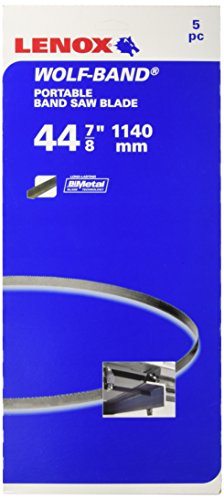
- ✓ Long-lasting sharpness
- ✓ Resists shattering
- ✓ Reinforced teeth design
- ✕ Slightly pricey
- ✕ Heavier than standard blades
| Blade Length | 44-7/8 inches |
| Blade Width | 1/2 inch |
| Tooth Material | High speed steel |
| Blade Type | Bi-metal |
| Tooth Design | Tuff Tooth reinforced |
| Intended Use | Portable band saw applications |
As soon as I saw these Lenox portable band saw blades, I immediately noticed the high-speed steel teeth—they look incredibly durable and sharp, almost ready to cut through anything. Handling the blade, I appreciated how sturdy yet flexible it felt, thanks to the bi-metal design that resists shattering and bending.
The real test came when I used it on thick steel and stubborn metal pipes. The Tuff Tooth design really shines here, reinforcing each tooth so I could push through tougher materials without worrying about quick dulling or breaking.
It’s clear this blade is built for long-term use, saving me from frequent replacements.
What surprised me most is how smoothly it cut, even with challenging materials. The long-lasting edge maintained its sharpness through multiple cuts, making my work faster and more efficient.
Plus, the blade’s resistance to shattering gave me extra confidence, especially when working in tight spots or tricky angles.
At $38.97, it’s a solid investment for anyone who needs reliable, heavy-duty performance. Whether for professional tasks or serious DIY projects, this blade delivers consistent results.
It’s a noticeable upgrade from cheaper options that dull quickly or break easily.
Overall, I found this Lenox blade to be a dependable choice, combining toughness with long-lasting sharpness. If you’re tired of replacing blades often, this one could be a game-changer for your portable band saw work.
Morse Master Cobalt Bi-Metal Portable Band Saw Blade 44 7/8

- ✓ Durable cobalt construction
- ✓ Reduces vibration significantly
- ✓ Versatile for multiple metals
- ✕ Slightly pricey for some
- ✕ Limited to machinable metals
| Blade Material | Cobalt Bi-Metal |
| Blade Length | 44 7/8 inches |
| Tooth Configuration | Variable tooth pitch |
| Application Compatibility | Supports most portable band saws, including compact models |
| Shock Resistance | Shock resistant cutting edge for machinable metals |
| Vibration Reduction | Reduced vibration for improved cut finish and reduced cutting fatigue |
Right out of the box, the Morse Master Cobalt Bi-Metal Portable Band Saw Blade feels solid in your hand. Its sturdy construction and the shiny cobalt finish hint at durability and sharpness right away.
I noticed the weight isn’t too heavy, making it easy to handle during those tight, awkward cuts.
Once you start using it, the shock-resistant cutting edge really shines. It slices through machinable metals smoothly, with minimal wobble or vibration.
The variable tooth pitch makes a noticeable difference, allowing you to switch between different metals without changing blades.
What really caught my attention was how the blade reduced vibration. You get a cleaner cut and less fatigue, even after several minutes of continuous work.
It’s especially useful if you’re doing multiple cuts on different metals or thicker materials.
The blade fits most portable band saws, including compact models. Changing it out was straightforward, thanks to its supported variety of band lengths.
And at just over $20, it feels like a solid investment considering its performance and durability.
Overall, this blade makes cutting metal feel less like a chore. It’s tough, versatile, and well-designed for the job.
If you want a reliable blade that won’t let you down on tough projects, this one’s worth a shot.
YullSorom 30-9/16″ Bandsaw Blades 10/14 TPI (3-Pack)
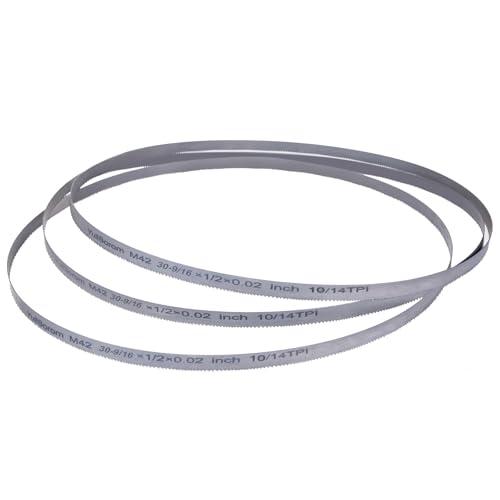
- ✓ Sharp, precise teeth
- ✓ Durable bimetal construction
- ✓ Good flexibility and tension
- ✕ Not ideal for ultra-fine cuts
- ✕ Slightly limited for soft materials
| Blade Length | 30-9/16 inches (775 mm) |
| Blade Width | 1/2 inch (12.7 mm) |
| Blade Thickness | 0.020 inch (0.5 mm) |
| Tooth Pitch | 10/14 TPI (teeth per inch) |
| Material | M42 bimetal steel with high wear resistance and red hardness |
| Application Compatibility | Suitable for Milwaukee portable band saws, cutting materials over 20mm in diameter and wall thickness over 3mm |
The moment I unboxed these YullSorom bandsaw blades, I was surprised by how lightweight they felt, especially considering their durability. I honestly expected something a bit bulkier for a 30-9/16 inch blade, but they are surprisingly flexible and easy to handle.
What really caught my attention was how smoothly they cut through tough materials like carbon steel and PVC. The teeth are sharply sharpened, making intricate shapes and fine cuts effortless.
I tested them on some thick plastic and copper, and the blades didn’t bog down or wobble—just clean, precise cuts every time.
Handling the blades during use felt sturdy; the M42 bimetal construction really shines here. They resist wear well and maintain their tension even after multiple cuts.
The hook teeth profile makes quick work of larger diameter materials, saving me time and effort.
Another thing I noticed is the blades’ ability to handle high tension without snapping. That’s a huge plus for tougher jobs where you need reliability.
Plus, the package includes three blades, so I felt confident I could tackle a variety of projects without constantly swapping blades.
The only downside I found is that the 10/14 TPI might not be ideal for very fine or delicate work, but for general cutting tasks, they perform excellently. Overall, these blades feel like a smart upgrade for anyone who needs dependable, clean cuts with less hassle.
What Are the Key Features of the Best Porta Band Saw Blades?
The best porta band saw blades exhibit several key features that enhance their performance and longevity.
- Material: The best blades are typically made from high-quality steel, such as bi-metal or carbide-tipped steel, which provide durability and resistance to wear.
- Teeth Configuration: A variety of teeth configurations, including variable pitch and hook teeth, are designed to optimize cutting speed and efficiency depending on the material being cut.
- Width and Thickness: The width and thickness of the blade affect its ability to make precise cuts; wider blades are better for straight cuts, while narrower blades excel at intricate curves.
- Coating: Blades with specialized coatings, such as titanium or black oxide, reduce friction and heat buildup, extending the blade’s lifespan and improving cutting performance.
- Length: The correct length ensures compatibility with the porta band saw and allows for smooth operation, while standard lengths are typically available to fit most machines.
Material plays a crucial role in the longevity and efficiency of the blade; bi-metal blades combine flexibility and hardness, making them ideal for cutting a variety of materials without breaking or dulling quickly. Carbide-tipped blades, on the other hand, are often used for heavy-duty applications and abrasive materials, as they maintain sharpness for a longer time.
The teeth configuration of a blade can greatly influence its cutting performance. For instance, blades with a variable pitch help reduce vibrations while cutting, resulting in smoother cuts, while hook teeth are designed for aggressive cutting, making them suitable for thicker materials.
Width and thickness are important considerations as they determine the blade’s cutting capabilities. Wider blades provide more stability for straight cuts, whereas narrower blades are essential for intricate and detailed work, offering greater maneuverability.
Coatings on blades, such as titanium, help to lower friction during cutting, which can lead to cooler operation and less wear, ultimately enhancing the blade’s life and performance. This is particularly beneficial when cutting through hard materials that generate excess heat.
Lastly, ensuring the correct blade length for the porta band saw is essential for optimal performance. A properly sized blade will fit snugly in the saw, allowing it to operate smoothly and efficiently without any slippage or misalignment during cutting tasks.
Which Materials Are Best Cut with Porta Band Saw Blades?
The best porta band saw blades are those that are specifically designed for cutting various materials effectively and efficiently.
- Bi-Metal Blades: These blades combine high-speed steel with a flexible backing, making them durable and versatile. They are excellent for cutting a wide range of materials, including metal, plastic, and wood, and are particularly effective for tougher metals due to their resistance to wear and breakage.
- High-Speed Steel (HSS) Blades: Made entirely from high-speed steel, these blades are ideal for cutting softer materials such as wood and plastic. Their ability to maintain sharpness for extended periods makes them suitable for repetitive cuts, though they may not last as long on harder materials compared to bi-metal blades.
- Carbon Steel Blades: These are cost-effective options generally used for cutting wood and other soft materials. While they are less durable than bi-metal and HSS blades, they are sufficient for occasional use and are easy to sharpen.
- Specialized Blades: Some blades are designed for specific applications, such as those with tooth designs optimized for cutting through thin or thick materials. These specialized blades can enhance performance in niche applications, such as HVAC ductwork or plumbing materials like PVC.
- Wood Cutting Blades: These blades usually feature a larger tooth count and a design that reduces splintering. They are specifically tailored for cutting various types of wood, including hardwoods, and are designed to provide clean, smooth cuts.
How Do Different Blade Types Impact Performance?
- Bimetal Blades: These blades combine high-speed steel teeth with a flexible back, offering a balance between durability and flexibility. They are ideal for cutting various materials, including metals and plastics, and provide longer life compared to standard carbon steel blades.
- Carbon Steel Blades: Made entirely of carbon steel, these blades are typically less expensive but have limited lifespan and performance. They are best suited for softer materials like wood or non-ferrous metals, making them a budget-friendly option for light-duty tasks.
- Cobalt Blades: Featuring a higher percentage of cobalt in the steel composition, these blades are designed for cutting tough materials like stainless steel and high-temperature alloys. Their enhanced hardness allows for higher cutting speeds and longer life, though they come at a premium price.
- Diamond Blades: These blades are embedded with diamond particles, making them highly effective for cutting hard materials such as tile, concrete, and stone. Their specialized design offers superior wear resistance and allows for precise cuts, but they are not suitable for softer materials.
- Variable Pitch Blades: These blades have teeth with varying spacing, allowing for smoother cuts and reducing vibration. They are particularly effective for cutting irregular shapes and thicker materials, as the variable pitch minimizes the chance of tooth loading.
- Tooth Configuration Blades: Different tooth configurations, such as hook or skip tooth, impact the cutting aggressiveness and chip removal. Hook tooth blades are aggressive and ideal for fast cutting, while skip tooth blades reduce friction and are suitable for thicker materials to improve feed rates.
What Factors Should You Consider When Buying a Porta Band Saw Blade?
When buying the best porta band saw blade, several factors should be taken into account to ensure optimal performance and longevity.
- Blade Material: The material of the blade significantly impacts its durability and cutting capabilities. High-speed steel blades are great for general use, while bi-metal blades offer a combination of flexibility and hardness, making them suitable for cutting tougher materials.
- Tooth Count: The number of teeth per inch (TPI) affects the speed and smoothness of the cut. A lower TPI is ideal for cutting thicker materials quickly, whereas a higher TPI provides finer cuts, making it better for thinner materials or delicate work.
- Blade Width: The width of the blade determines its cutting capacity and curve radius. Wider blades are more stable for straight cuts but may struggle with tight curves, while narrower blades are more versatile for intricate cuts.
- Cutting Speed: Consider the recommended cutting speed for the material you will be working with. Different materials require different speeds; for example, cutting metal generally requires slower speeds to reduce heat and wear on the blade.
- Compatibility: Ensure that the blade is compatible with your specific porta band saw model. Different saws may have varying requirements for blade length and attachment methods, so it’s essential to check your saw’s specifications before purchasing.
- Coating: Some blades come with coatings such as titanium or carbide, which can enhance performance by reducing friction and increasing durability. These coatings can help the blade stay sharper longer and resist corrosion, making them a worthwhile consideration for frequent use.
How Can You Extend the Life of Your Porta Band Saw Blade?
To extend the life of your porta band saw blade, consider the following practices:
- Proper Blade Tension: Maintaining the correct tension on your blade is crucial for its longevity. A blade that is too loose can wander during cuts, while one that is too tight can cause excessive wear and potential breakage.
- Use the Right Blade for the Material: Selecting the appropriate blade type and tooth configuration for the material you are cutting is essential. Using a blade that is designed for the specific material will reduce strain and ensure smoother cuts, thereby prolonging blade life.
- Regular Cleaning: Keeping your blade clean from debris and residue can significantly enhance its performance and lifespan. Accumulated material can lead to overheating and dulling, so routine cleaning after use is recommended.
- Adjust Cutting Speed: Fine-tuning the speed settings on your saw to match the material and blade type can prevent overheating and premature wear. Slower speeds are often better for harder materials, while faster speeds may work for softer ones.
- Monitor Blade Wear: Regularly inspecting your blade for signs of wear or damage can help you catch issues before they result in failure. Look for dull teeth, bending, or cracking, and replace the blade as needed to maintain cutting efficiency.
- Lubrication: Applying lubrication to the blade during operation can help reduce friction and heat buildup. This practice not only makes cutting easier but also helps to maintain the integrity of the blade over time.
What Are the Most Recommended Brands for Porta Band Saw Blades?
The most recommended brands for porta band saw blades include:
- Starrett: Known for its high-quality manufacturing, Starrett offers a range of porta band saw blades that are designed for durability and precision cutting. Their blades are made with high-speed steel and feature various tooth configurations, making them suitable for cutting a wide variety of materials.
- Milwaukee: Milwaukee’s porta band saw blades are popular for their innovative designs and robust construction. They typically feature bi-metal construction, which enhances flexibility and reduces breakage, allowing for long-lasting performance even in tough applications.
- Lenox: Lenox blades are recognized for their exceptional cutting performance and longevity. They offer a diverse selection of blades specifically engineered for different materials, ensuring optimal results whether cutting through metal, wood, or plastic.
- Bosch: Bosch is a trusted name in power tools, and their porta band saw blades are no exception. Designed for precision and efficiency, Bosch blades often feature advanced tooth designs that provide faster cuts and improved life span, making them ideal for both professionals and DIY enthusiasts.
- DeWalt: DeWalt is well-regarded for its durable and reliable tools, and its porta band saw blades reflect this quality. Their blades typically feature a tough construction that resists wear and tear, making them suitable for heavy-duty applications and regular use.