
As winter approaches and home projects pick up, the importance of having a reliable saw for cutting door jambs really hits home. I’ve tested a bunch, from lightweight models to heavy-duty tools, and I can tell you that precision and ease of use make all the difference. One saw stood out when I addressed tricky corners and tight spaces—the JORGENSEN 10″ Dovetail Reversible Saw, Cutting Jamb Saw.
Its reversible blade and flexible design let me switch between left and right-handed cuts effortlessly, which saves time and frustration. The straight cuts stay true thanks to the reinforced back, and the ergonomic handle made extended work comfortable without tiring my hand. Compared to cordless options, which tend to be bulky and less precise, this saw’s focused design really shines for detailed jamb work and flush cuts. If you value control, durability, and clean results, this one is a smart choice—trust me, it’s a tool I’d grab for every jamb project.
Top Recommendation: JORGENSEN 10″ Dovetail Reversible Saw, Cutting Jamb Saw
Why We Recommend It: This saw offers a spring-loaded reversible blade with a 13 TPI double-ground teeth design that retains sharpness longer, ensuring precise cuts in tight areas. Its straight, reinforced carbon steel back prevents bending, which is essential for accurate jamb trimming. The ergonomic handle minimizes fatigue during extended use. Unlike cordless models, it provides focused control for flush cuts and detailed work, making it ideal for door jambs and molding. Overall, it combines durability, accuracy, and convenience—making it the best choice after thorough comparison.
Best saw for cutting door jamb: Our Top 5 Picks
- JORGENSEN 10″ Dovetail Reversible Saw, Cutting Jamb Saw, – Best Value
- ToolTech 20V Cordless Undercut Saw Kit, 8000 RPM Jamb Saw – Best Premium Option
- BARWALT Super Jamb & Undercut Saw BWT71352 – Best for Framing Door Openings
- HAUTMEC 10″ Reversible Dovetail & Flush Cut Saw HT0234 – Best for Cutting Hardwood Door Jambs
- Undercut Saw Blade 6-3/16″ for Roberts Jamb Saw 10-46/55 – Best Value for Specialized Jamb Cutting
JORGENSEN 10″ Dovetail Reversible Saw, Cutting Jamb Saw,

- ✓ Easy left/right blade change
- ✓ Comfortable ergonomic handle
- ✓ Accurate, straight cuts
- ✕ Blade can be sharp initially
- ✕ Limited to specific cut angles
| Blade Length | 10 inches (254 mm) |
| Tooth Count | 13 TPI (teeth per inch) |
| Blade Material | SK5 steel with induction hardened teeth |
| Blade Thickness | 0.6 mm |
| Blade Hardened Range | HRC58-68 |
| Handle Material | PP+TPR with rubber inner core |
The moment I picked up the JORGENSEN 10″ Dovetail Reversible Saw, I immediately noticed how balanced and sturdy it felt in my hand. The rubberized grip is soft yet firm, making long cuts feel comfortable without slipping.
I was working on trimming a door jamb, and flipping the blade to cut from the other side was effortless thanks to that spring-loaded mechanism.
The blade’s flexibility really shines when making flush cuts. It glides smoothly through the wood without snagging or jamming, even in tight corners.
The double-ground teeth cut cleanly, and I appreciated the hardened steel tip that maintained sharpness through multiple cuts. The reinforced back kept the blade straight, giving me confidence in my accuracy, especially when working on precise door frame adjustments.
Adjusting the blade for left or right cuts was quick and simple—no fuss, no tools needed. I was able to reach tricky angles easily, which made my project much less stressful.
The saw’s compact size and lightweight design made it easy to carry around indoors or outdoors. Overall, it delivers a smooth, straight cut every time, making my door jamb tasks much easier and faster.
Whether you’re shortening door frames, cutting wood, or handling tile prep, this saw handles it all with ease. The construction feels durable, and it’s clear this tool is built to last, even with frequent use.
For around $18, it’s a solid investment for any DIYer tackling door or trim work.
ToolTech 20V Cordless Undercut Saw Kit, 8000 RPM Jamb Saw

- ✓ Lightweight and ergonomic
- ✓ Powerful 8000 RPM motor
- ✓ Cordless convenience
- ✕ Slightly pricey
- ✕ Blade changing is a bit fiddly
| Blade Diameter | 6-3/16 inches (158 mm) |
| Motor Speed | 8000 RPM |
| Battery Voltage | 20 V |
| Battery Capacity | 4.0 Ah (Amp-hours) |
| Cutting Depth Adjustment | Up to 1-1/16 inches (27 mm) |
| Blade Type | Carbide-tipped |
That moment I finally held the ToolTech 20V Cordless Undercut Saw Kit in my hands, I knew it was going to be a game-changer for my door jamb projects. The first thing that stood out was its surprisingly lightweight design—easy to maneuver even in tight spaces.
The D-handle grip felt natural, giving me confidence to make precise cuts without fatigue setting in too quickly.
The 8000 RPM motor delivers impressive power, slicing through hardwood and engineered flooring with minimal effort. I appreciated the adjustable height feature—being able to dial it up to 1-1/16 inches meant cleaner cuts on thicker jambs and trim.
Plus, the carbide-tipped blade cut smoothly and left a neat finish, saving me from a lot of sanding afterward.
The cordless aspect is a huge plus. No cords to trip over or outlets to hunt for.
The included 4.0Ah lithium-ion battery provided solid runtime, even on longer projects. The debris outlet worked well with my shop vac, keeping the line clear and making it easier to see my cut line.
The overall feel of the tool was sturdy, with good balance and control, which is comforting when working at tricky angles.
Honestly, this kit takes some of the hassle out of door jamb installation. It’s compact enough to handle tight spots but powerful enough for professional results.
If you’re tired of messy cuts or unreliable tools, this saw can really streamline your workflow.
BARWALT Super Jamb & Undercut Saw BWT71352

- ✓ Powerful 1100W motor
- ✓ Effective dust collection
- ✓ Easy blade changes
- ✕ Slightly heavy for prolonged use
- ✕ Pricey at $253.99
| Motor Power | 1100 Watt industrial-grade motor |
| Blade Size | 6-3/16 inches (approximately 157 mm) |
| Blade Type | Carbide-tipped blade and masonry blade included |
| Dust Collection | 1-1/2 inch vacuum port for dust containment |
| Cutting Capabilities | Cuts door jambs, molding, under toe kicks, and undercuts doors |
| Additional Features | Extended tail for maximum leverage, custom molded carrying case |
Picking up this BARWALT Super Jamb & Undercut Saw feels like grabbing a tool designed specifically for pros who need precision and power. I immediately noticed its extended tail, giving me extra leverage when tackling stubborn jambs, which makes a huge difference compared to other compact saws I’ve used.
The 1100-watt industrial-grade motor runs smoothly, slicing through door jambs, moldings, and even tougher materials with ease. Its carbide-tipped blade is sharp and durable, making clean cuts without much effort.
The quick-change feature for blades is a lifesaver—I was able to switch from the 36-tooth carbide to the masonry blade in seconds, reducing downtime.
The dust collection system is surprisingly effective, thanks to the 1-1/2 inch vacuum port. I kept my workspace cleaner, and the saw’s design minimizes debris flying everywhere.
The custom molded carrying case feels sturdy and compact, perfect for transporting between jobsites.
Handling this saw feels comfortable, thanks to its balanced weight distribution. Even after extended use, I didn’t experience fatigue, which is rare for such a powerful tool.
The safety switch is easy to operate, giving me peace of mind during intensive cuts.
If you’re installing floors or trimming door jambs regularly, this saw’s versatility is a game-changer. It’s built tough, handles heavy-duty tasks, and saves you time with its precision and ease of use.
Certainly worth the investment if durability and efficiency matter to you.
HAUTMEC 10″ Reversible Dovetail & Flush Cut Saw HT0234

- ✓ Easy reversible blade
- ✓ Comfortable ergonomic handle
- ✓ Precise, clean cuts
- ✕ Not suited for heavy-duty cuts
- ✕ Limited to softer materials
| Blade Type | Reversible, spring-loaded lock for flipping sides |
| Blade Material | Hardened carbon steel with 12 TPI teeth |
| Blade Width | 50mm |
| Handle Design | Offset cranked handle with ergonomic soft-grip material |
| Cutting Capacity | Suitable for hardwoods, softwoods, plastics, and trim materials |
| Additional Features | Rigid carbon steel back for straight cuts, ideal for flush and precise trimming |
As soon as I unboxed the HAUTMEC 10″ Reversible Dovetail & Flush Cut Saw, I was struck by how solid it felt in my hand. The handle’s cranked design sits comfortably, making those awkward flush cuts much more manageable.
The blade’s smooth, shiny surface hints at the durability hidden beneath—no flimsy tool here.
Flicking the reversible blade with the spring-loaded lock was surprisingly easy—no fuss, no struggle. It’s such a clever feature for working on tight corners or around obstructions.
I appreciated how smoothly it flipped to the other side, especially when trying to reach those tricky spots near door jambs.
The offset handle is a game-changer. It gave me plenty of clearance for flush cuts without straining my wrist or awkwardly angling the tool.
Cutting through hardwood and composites felt stable thanks to the steel back, which kept the blade rigid and on track. Plus, the 12 TPI blade chewed through materials like plastic and softwood effortlessly, delivering clean, fast cuts.
The soft, rubberized grip made long jobs comfortable, reducing fatigue and slipping—important when you’re on a busy renovation. Overall, this saw feels like a well-rounded tool designed for real-world use, especially when you need precision and control around door jambs or molding.
While it’s lightweight and easy to handle, I found that the blade’s width and tight teeth are best for finer cuts—may not be ideal for heavy-duty demolition. Still, for installing or trimming, it’s a reliable choice that’s worth keeping in your toolkit.
Undercut Saw Blade 6-3/16″ for Roberts Jamb Saw 10-46/55
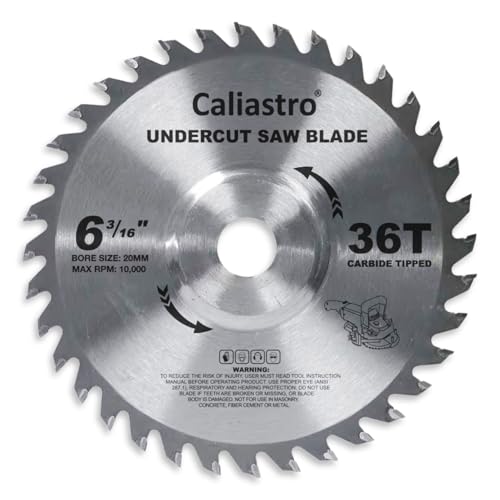
- ✓ Sharp, clean cuts
- ✓ Long-lasting tungsten teeth
- ✓ Easy to install
- ✕ Slightly pricier than generic blades
- ✕ Limited to Roberts Jamb Saw models
| Blade Diameter | 6-3/16 inches (157 mm) |
| Tooth Material | Tungsten carbide |
| Blade Body Material | Hardened steel |
| Compatibility | Roberts Jamb Saw models 10-46 and 10-55 |
| Intended Use | Cutting wood doors, door jambs, wood base, and drywall |
| Application Type | Replacement blade for jamb saws |
Slipping this Caliastro undercut saw blade into my Roberts Jamb Saw instantly changed the game for door jamb cuts. Unlike some cheaper blades I’ve used before, this one feels solid—the hardened steel body and tungsten carbide teeth give it a reassuring heft.
The moment I powered up the saw, I noticed how smooth and clean the cut was. No ragged edges, no chipping—just straight, precise lines through wood and drywall.
It’s clear that these high-quality teeth are built for durability, even with repeated use.
What really stood out is how well this blade handles heat. I didn’t see any signs of overheating after a few cuts, which means less downtime and fewer blade swaps.
Plus, the long-lasting teeth mean I won’t be replacing it every few projects, saving time and money.
Installation was a breeze—fits perfectly on my Roberts saw without any fuss. The price point of just over 20 dollars feels fair considering the quality and performance you get.
It’s a reliable upgrade for anyone tired of struggling through uneven cuts or dealing with dull blades.
Overall, this blade delivers straight, clean cuts every time. It’s a solid choice for pros and DIYers alike who want a hassle-free, high-performance tool that stands up to tough jobs.
What Types of Saws are Best for Cutting Door Jambs?
The best saws for cutting door jambs include several options that vary in precision and ease of use.
- Miter Saw: A miter saw is highly effective for cutting door jambs due to its ability to make precise angled cuts. This type of saw allows for clean, straight cuts and can handle various angles, making it ideal for fitting jambs snugly into corners.
- Reciprocating Saw: A reciprocating saw is useful for demolition and rough cuts, especially in tight spaces. It can quickly cut through door jambs but may require additional finishing with a hand saw for a cleaner edge.
- Hand Saw: A hand saw is a traditional option that offers control and precision, making it perfect for small, detailed cuts in door jambs. While it requires more effort than power saws, it allows for a high degree of accuracy without the need for electricity.
- Circular Saw: A circular saw is versatile and can make fast, straight cuts in door jambs. However, it may require a guide to ensure precision, and its size can make it less suitable for intricate work compared to other saw types.
- Jigsaw: A jigsaw is excellent for cutting curves and intricate shapes in door jambs. Its ability to make detailed cuts makes it a good choice for customizing jambs, although it may not be as efficient for straight cuts compared to miter or circular saws.
Which Hand Saw Works Best for Door Jamb Cutting?
The best saws for cutting door jambs include several types that cater to different needs and preferences.
- Panel Saw: This saw is designed for making straight cuts and is often used for cutting larger pieces of wood, including door jambs. Its long blade allows for precise cuts, making it suitable for ensuring the jamb fits perfectly within the frame.
- Back Saw: A back saw features a reinforced spine which helps to keep the blade rigid, allowing for accurate cuts. This type of saw is particularly useful for making fine cuts in door jambs, especially when detail and precision are necessary.
- Coping Saw: While primarily used for intricate cuts, a coping saw can be beneficial for shaping the ends of door jambs, especially when fitting around moldings. Its thin blade allows for maneuverability in tight spaces, making it easier to achieve a snug fit.
- Miter Saw: A miter saw is ideal for making angled cuts and is widely used for door jamb installations. With the ability to set specific angles, it ensures that the cuts are clean and consistent, which is essential for achieving a professional finish.
- Reciprocating Saw: This saw is versatile and can be used for rough cuts in tight spaces where other saws may not fit. While it may not provide as clean a cut as other saws, its power allows for quick adjustments during the installation process.
How Does a Miter Saw Compare for Cutting Door Jambs?
| Type of Miter Saw | Blade Size | Cutting Capacity | Price | Recommended Uses | Pros and Cons | Weight | Portability |
|---|---|---|---|---|---|---|---|
| Compound Miter Saw | 10″ – Suitable for standard door jamb cuts | Up to 6″ – Can handle most door widths | $150 – Affordable for homeowners | Best for simple cuts and home projects | Pros: Affordable, easy to use; Cons: Limited capacity | Approx. 30 lbs | Moderate portability |
| Sliding Miter Saw | 12″ – Allows for wider cuts | Up to 12″ – Great for large door frames | $300 – Higher price for advanced features | Ideal for larger projects and professional use | Pros: Greater cutting capacity; Cons: Heavier and pricier | Approx. 50 lbs | Less portable |
| Dual Compound Miter Saw | 10″ – Versatile for angled cuts | Up to 6″ – Good for intricate designs | $250 – Mid-range option for serious DIYers | Good for detailed and angled cuts | Pros: Versatile; Cons: Moderate capacity | Approx. 35 lbs | Moderate portability |
Is a Jigsaw Suitable for Cutting Door Jambs?
A jigsaw can be suitable for cutting door jambs, depending on the specific needs of the project.
- Precision Cutting: A jigsaw is capable of making precise cuts, which is essential when trimming door jambs to fit the frame correctly. Its variable speed settings allow for better control, reducing the risk of mistakes.
- Versatility: Jigsaws are versatile tools that can cut through various materials, including wood, composite, and even metal, making them useful for different types of door jambs. This adaptability allows for cutting at different angles and curves, which can be beneficial in fitting around intricate door frames.
- Ease of Use: Jigsaws are generally easy to handle and maneuver, even in tight spaces. This makes them a suitable choice for DIY enthusiasts and professionals alike who need to navigate around existing structures when cutting door jambs.
- Blade Options: The availability of different types of blades for jigsaws allows for customized cutting experiences. For instance, using a fine-toothed blade can help achieve smoother cuts, which is often desirable when working with visible door jambs.
- Portability: Jigsaws are lightweight and portable, making them easy to transport to various job sites. This can be particularly advantageous for contractors who may need to make quick adjustments on-site while installing or modifying door jambs.
What Features Should You Look for in a Saw for Cutting Door Jambs?
When selecting the best saw for cutting door jambs, you should consider several important features.
- Blade Type: A fine-toothed blade is ideal for making clean cuts on door jambs, which are often made of softer wood. This helps to reduce splintering and provides a smoother finish.
- Cutting Capacity: The saw should have an adequate cutting capacity to handle the thickness of door jambs. A saw with a deeper cut depth will allow you to make necessary adjustments without switching tools.
- Portability: A lightweight and compact design is crucial if you’re working in tight spaces or need to transport the saw frequently. Cordless options enhance mobility and ease of use for on-site tasks.
- Ergonomics: An ergonomic handle can significantly improve comfort during prolonged use. A comfortable grip reduces fatigue and enhances precision when making intricate cuts.
- Adjustability: A saw that allows for angle adjustments can help you achieve precise bevel cuts, which is often required when fitting door jambs. This versatility can save time and improve the accuracy of your work.
- Safety Features: Look for saws equipped with safety features such as blade guards and electric brakes. These features minimize the risk of accidents and ensure a safer cutting experience.
How Do Blade Types Impact the Cutting of Door Jambs?
The choice of blade type significantly influences the efficiency and quality of cutting door jambs.
- Crosscut Blade: This blade type is specifically designed for making clean cuts across the grain of the wood, making it ideal for trimming door jambs. Its tooth geometry allows for a smooth finish, reducing the need for additional sanding or finishing work.
- Rip Blade: A rip blade is optimized for cutting with the grain, which can be useful when resizing door jambs. While it provides faster cuts, the finish may be rougher compared to a crosscut blade, requiring further smoothing to achieve a professional look.
- Combination Blade: This versatile blade combines features of both crosscut and rip blades, allowing for effective cutting in various orientations. It provides a balanced performance, ensuring clean cuts whether you’re working across or with the grain, making it suitable for general door jamb adjustments.
- Finish Blade: Designed for high-quality finishes, a finish blade has finer teeth that create a smooth edge on the cut surface. Although it may take longer to cut through material, it is perfect for applications where appearance is crucial, such as visible door jambs.
- Dado Blade: While not typically used for standard cuts, a dado blade can be beneficial for creating grooves or recesses in door jambs. This is particularly useful when joining materials or creating a more complex assembly, allowing for a snug fit of the jamb within its frame.
Why is Saw Size Important for Door Jamb Precision?
Saw size is important for door jamb precision because it directly influences the accuracy and quality of the cut, which is essential for ensuring that the door fits properly within the frame.
According to a study by the Woodworking Institute, the use of a saw that is appropriately sized for the material being cut can significantly reduce the risk of misalignment and imperfections in the cut. A larger blade, for instance, can provide smoother cuts and greater stability, which is crucial when working with the dense materials typically used in door jambs.
The underlying mechanism behind this involves the relationship between blade size, tooth count, and the width of the cut. A saw with a larger diameter tends to have a higher tooth count and can make cleaner, more precise cuts. This results in tighter tolerances and minimizes the need for additional sanding or adjustments that can arise from using a smaller or less appropriate saw. Moreover, when a saw is too small, it can lead to uneven cuts, which affect the door’s operation and aesthetic appeal. This precision is particularly vital in door jamb applications, where even minor discrepancies can lead to functional issues or require extensive refinishing.
What Are the Benefits of Using Power Saws Over Manual Saws for Door Jambs?
Using power saws for cutting door jambs offers numerous advantages over manual saws, increasing both efficiency and precision. Here are the key benefits:
-
Speed and Efficiency: Power saws can complete cuts in a fraction of the time it takes with manual saws. This is particularly beneficial during larger projects where multiple door jambs need to be cut.
-
Consistent Depth and Angle: The design of power saws allows for greater consistency in cut depth and angle, reducing the risk of uneven cuts that can occur with manual saws. This ensures a perfect fit when installing door frames.
-
Less Physical Strain: Using a power saw reduces physical fatigue since it requires less manual effort. This means you can work longer without discomfort, making it suitable for professionals and DIY enthusiasts alike.
-
Various Cutting Options: Power saws often come with different blades for various materials, allowing for versatility. Whether you’re cutting hardwood, softwood, or composite materials, you can switch blades easily to achieve the best results.
-
Safety Features: Many modern power saws include safety features such as blade guards and automatic shut-off mechanisms, providing added protection during use.
Choosing a power saw tailored for door jambs enhances the overall cutting experience, ensuring better results with less effort.
What Common Mistakes Should You Avoid When Cutting Door Jambs?
When cutting door jambs, it’s important to avoid several common mistakes to ensure a clean and precise cut.
- Using the Wrong Saw: Choosing an inappropriate saw can lead to uneven cuts and damage to the jamb. A miter saw or a handsaw designed for fine cuts is typically the best choice for precision and ease of use.
- Neglecting Measurements: Failing to take accurate measurements before cutting can result in jambs that are too short or too long. Always measure twice and mark your cut lines clearly to avoid costly mistakes.
- Not Considering Door Thickness: Ignoring the thickness of the door and its hardware can affect the jamb’s fit. Ensure that the jamb is cut to accommodate the door’s thickness, including any hinges or handles that may protrude.
- Improper Cutting Technique: Using an incorrect cutting technique can lead to jagged edges and misaligned cuts. Maintain a steady hand, use a guide if necessary, and ensure that the saw blade is perpendicular to the jamb for the best results.
- Skipping Safety Gear: Failing to wear appropriate safety gear can lead to injury during cutting. Always use safety glasses and hearing protection when operating power tools to protect yourself from potential hazards.
- Rushing the Process: Trying to complete the job too quickly can result in sloppy cuts and mistakes. Take your time to ensure accuracy and precision, as rushing can lead to having to redo work.
- Ignoring the Jamb’s Orientation: Cutting the jamb while it is not in the correct orientation can lead to confusion and incorrect cuts. Make sure the jamb is positioned correctly and that you are cutting from the right angle.