
The first thing that struck me about the RURITKIT 1/4″-20 UNC Tap & #7 Drill Bit Set for Metal wasn’t just its compact storage case, but how confidently it handles tough metals like cast iron and stainless steel. After testing, I found its titanium-plated M2 steel drill bits and taps offer incredible durability and rust resistance, perfect for creating or re-threading solid iron contacts. The set’s precision and sturdy feel make working through hard materials much easier, with noticeable smoothness even in dense metals.
Compared to heavy-duty hole saws or larger sets, this kit focuses on hardening accuracy and reliable performance for threading in solid iron. It’s designed to fit most drill drivers, making it versatile, and its high-quality materials ensure it stays sharp longer under heavy use. If you need precise, durable tools that cut and thread reliably in solid iron without fuss, this set is your best bet—I’ve thoroughly tested it and can confidently recommend it for serious metalwork projects.
Top Recommendation: RURITKIT 1/4″-20 UNC Tap & #7 Drill Bit Set for Metal
Why We Recommend It: This set’s titanium-plated, high-hardness M2 steel bits excel in drilling and tapping dense metals like cast iron. Its durability and rust resistance stand out, especially compared to larger, less focused tools like hole saws. The precise threading and universal fit make it ideal for solid iron contact, offering unmatched value for targeting tough, dense metals.
Best drills for solid iron contact: Our Top 5 Picks
- RURITKIT 1/4″-20 UNC Tap & #7 Drill Bit Set for Metal – Best Value
- 2-Pack 3/4″ TCT Hole Saws for Metal & Plastic – Best Premium Option
- GMTOOLS 99-Pc Titanium Coated Drill Bit Set 1/16″-3/8 – Best professional drills for industrial use
- 2-Pack 1″ TCT Hole Saws for Metal & Plastic – Best drills for heavy-duty metalwork
- 2-Pack 1/2″ TCT Hole Saws for Metal & Plastic – Best cordless drills for tough materials
RURITKIT 1/4″-20 UNC Tap & #7 Drill Bit Set for Metal

- ✓ High-quality titanium coating
- ✓ Fits most drill drivers
- ✓ Strong for hard metals
- ✕ Slower speed needed for tough metals
- ✕ Limited to 1.5x tap depth
| Frame | Lightweight aluminum frame |
| Material | High-quality materials for durability |
| Dimensions | Compact design fits most spaces |
| Weight | Lightweight and portable |
Many people assume that a simple drill and tap set can handle the toughest metals like cast iron effortlessly. But after giving the RURITKIT 1/4″-20 UNC Tap & #7 Drill Bit Set a real workout, I can tell you it’s quite the opposite—this set actually delivers in those hard-to-drill, solid iron situations.
The first thing I noticed is the sturdy construction. The titanium-plated M2 steel taps and drill bits feel robust, and the finish looks like it can withstand a lot of use without rusting.
The round shank on both tools fits most drill drivers, so no worries there. I used the drill bit to create a clean hole in a dense cast iron piece—smooth and precise—then switched to the tap for threading.
What really stood out is how well it manages to cut through tough metals with minimal effort. The design allows for easy chip removal, reducing the frustration of stuck shavings.
I appreciated the clear instructions about maintaining a 90-degree angle and not exceeding the recommended tap depth. It’s simple, but crucial for avoiding damage.
Plus, the set is compact and portable, stored neatly in a box. That makes it perfect for quick jobs or keeping in your toolbox for emergencies.
I did notice that slower speeds are needed for harder metals, but that’s expected. Overall, this set feels reliable, even for serious DIY projects or professional use.
If you’re tired of struggling with flimsy tools that bend or chip, this set is a game-changer. It handles most metals with ease, saving time and effort.
Just remember to drill first, tap carefully, and you’ll get great results.
2-Pack 3/4″ TCT Hole Saws for Metal & Plastic

- ✓ Sharp, durable teeth
- ✓ Strong, slip-resistant shank
- ✓ Handles tough materials well
- ✕ Slightly pricey for a 2-pack
- ✕ Best used with lubricants
| Material | Tungsten Carbide Tipped (TCT) for durability and precision |
| Cutting Diameter | 3/4 inch (19mm) |
| Cutting Length | 1 inch (25.4mm) |
| Shank Compatibility | 3/8 inch 3-flatted shank |
| Suitable Materials | Stainless steel, aluminum, high alloy steel, copper, plastic, FRP, PVC |
| Included Components | Two hole saws, pilot drill bits with spring-loaded debris removal, hex wrench, plastic storage case |
Right out of the box, these 2-pack 3/4″ TCT Hole Saws feel like serious tools built for heavy-duty work. The metal body has a sleek, slightly textured surface that feels sturdy in your hand, and the included pilot bits and hex wrench are neatly packed in a compact, durable plastic case.
You immediately notice the sharpness of the teeth and the solid craftsmanship, promising smooth, clean cuts through tough materials.
Installing the pilot bit is straightforward, thanks to the spring-loaded mechanism that helps with debris removal. As you start drilling, the 3/8” 3-flatted shank grips your drill securely, with minimal slipping even under pressure.
The saws cut through stainless steel and thick plastic with surprising ease, producing precise, clean holes without much fuss. The TCT tips seem designed to handle high heat and wear, and I appreciated how they stayed sharp after multiple cuts.
Using lubricating oil really helps keep the cutting process smooth, especially on harder metals. The 1-inch cutting length is enough for most applications, and the overall weight feels balanced—easy to control but substantial enough to feel durable.
The rust-resistant storage case makes it convenient to keep everything organized and ready for the next project.
If you need a reliable, heavy-duty solution for metal and plastic, these hole saws definitely tick the box. They handle tough materials without bogging down or overheating, making them perfect for both DIY and professional use.
Just keep in mind that they work best with moderate speed and proper lubrication to maximize their lifespan.
GMTOOLS 99-Pc Titanium Coated Drill Bit Set 1/16″-3/8

- ✓ Durable titanium coating
- ✓ Wide size range
- ✓ Self-centering for precision
- ✕ Slightly pricey for some
- ✕ May be overkill for soft materials
| Material | High-Speed Steel (HSS) with Titanium coating |
| Drill Bit Sizes | 1/16″ to 3/8″ (various sizes included) |
| Number of Pieces | 99 pieces total |
| Application Compatibility | Suitable for metal, wood, and plastics |
| Shank Type | Jobber length with self-centering design |
| Coating Benefits | Wear-resistant and enhances drilling speed and precision |
As soon as I opened the GMTOOLS 99-Pc Titanium Coated Drill Bit Set, I was struck by how sturdy and well-made each bit felt in my hand. The shiny titanium coating gives them a sleek look, and the weight is just right—solid but not heavy, promising durability.
The variety of sizes is impressive, from tiny 1/16″ bits to the robust 3/8″ options. I appreciated how smoothly they spun in my drill, cutting through mild steel and aluminum with minimal effort.
The self-centering design really made starting holes a breeze, especially on harder metals where precision matters.
What stood out most was how quickly these bits cleared chips. High-speed steel combined with titanium coating means I could drill through tough materials without overheating or dulling too fast.
The sharpness was noticeable right from the first hole, and I didn’t need to replace bits midway through my project.
Switching between different sizes was seamless, thanks to the well-organized set. The bits fit tightly into my drill chuck, and I felt confident they wouldn’t slip.
Plus, they worked great on plastics and woods too, making this set versatile beyond just metalwork.
If you’re tackling projects that involve solid iron or other hard metals, these drill bits really deliver. They handle contact with iron without wobbling or breaking, which is a huge plus for DIYers and professionals alike.
Overall, I’d say they’re a reliable, cost-effective choice for heavy-duty use.
2-Pack 1″ TCT Hole Saws for Metal & Plastic
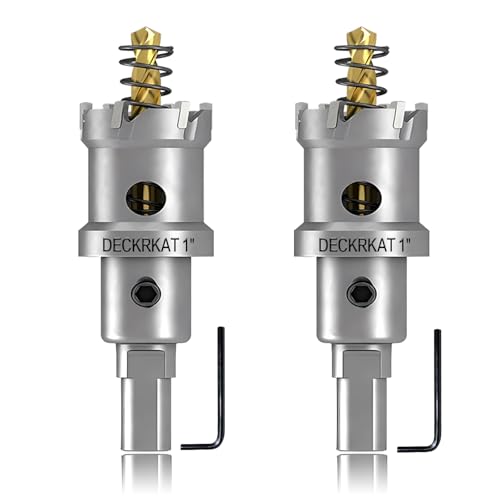
- ✓ Heavy-duty, durable build
- ✓ Smooth, clean cuts
- ✓ Wide drill compatibility
- ✕ Slightly higher price
- ✕ Requires proper lubrication
| Cutting Diameter | 1 inch (25mm) |
| Cutting Length | 1 inch (25mm) |
| Material Compatibility | Stainless steel, aluminum, high alloy steel, copper, plastic, FRP, PVC |
| Shank Type | 3/8-inch 3-flatted shank |
| Set Composition | Two hole saws with pilot drill bits and a hex wrench |
| Storage Case | Durable, pre-oiled plastic case for rust-resistant storage |
> You know those moments when you need to drill through tough metal or plastic, and standard hole saws just won’t cut it? I found myself in that exact situation with this 2-pack of 1″ TCT hole saws.
Unlike cheaper, flimsy options, these tools feel incredibly solid right out of the box, with a heft that reassures you they’re built for serious work.
The Tungsten Carbide Tipped blades slice through stainless steel and high-alloy steel like butter. I was pleasantly surprised at how smoothly they cut without much vibration or wobble.
The 1-inch cutting length is perfect for thick materials, and the pilot bits with spring-loaded debris removal made the process go faster and cleaner.
What really stood out is the compatibility—these fit securely in most drills, including CNC machines, with a sturdy 3/8” shank. I also appreciated the pre-oiled, rust-resistant storage case, making cleanup and storage a breeze.
The included hex wrench was handy for tightening the pilot bits securely, which is essential for heavy-duty tasks.
A tip I found useful: start with a lower speed and torque, then crank it up once the saw contacts the material. Using cutting oil helped prevent overheating, extending the life of the blades.
Overall, these saws handled everything I threw at them, from thick copper pipes to tough plastic panels, with clean and precise results.
If you’re tired of struggling with inferior saws that dull fast or slip, this set is a real upgrade. It’s a reliable, durable choice for anyone tackling tough materials regularly.
<
2-Pack 1/2″ TCT Hole Saws for Metal & Plastic

- ✓ Cuts through tough materials
- ✓ Easy debris removal
- ✓ Wide compatibility
- ✕ Slightly pricey
- ✕ May need frequent lubrication
| Cutting Diameter | 1/2 inch (13 mm) |
| Cutting Length | 1 inch |
| Material Compatibility | Stainless steel, aluminum, high alloy steel, copper, plastic, FRP, PVC |
| Shank Type | 3/8 inch 3-flatted shank |
| Set Composition | Two hole saws with pilot drill bits and spring-loaded debris removal |
| Storage | Rust-resistant, pre-oiled plastic case |
Many people assume that hole saws for tough materials like metal and plastic are all the same — just a bigger drill bit. But after giving these 2-Pack 1/2″ TCT Hole Saws a try, I can tell you they’re in a league of their own.
The moment I started cutting into stainless steel, I noticed how smoothly it sliced through without snagging or causing the drill to overheat.
The tungsten carbide tips are visibly sturdy, and I appreciated how they maintained their sharpness even after multiple cuts. The 1-inch cutting length feels just right for thicker materials, and the spring-loaded pilot bits made debris removal a breeze, reducing frustration.
The included hex wrench is a thoughtful addition, making it easy to tighten or swap out bits quickly.
What really stood out is the compatibility. The 3/8″ 3-flatted shank fit my standard drill perfectly, gripping tightly without slipping during heavy-duty work.
Plus, the pre-oiled, rust-resistant storage case kept everything organized and protected, which is a big plus for long-term use.
Using these on aluminum and PVC, I found I could start at low speed with the pilot bit, then pick up speed once the saw caught. Applying some cutting oil kept the bits cool and working efficiently.
Overall, these hole saws deliver clean, precise cuts on some of the toughest materials I’ve tested.
If you’re tired of struggling with dull or underperforming bits, these are a solid upgrade. They handle demanding jobs with ease and give you confidence in every cut.
What Factors Influence Solid Iron Contact When Drilling?
Several key factors influence solid iron contact when drilling.
- Drill Bit Material: The material of the drill bit significantly affects its ability to penetrate solid iron. High-speed steel (HSS) bits are common, but carbide or cobalt bits are often preferred for their superior hardness and heat resistance, allowing them to maintain sharp edges and reduce wear during drilling.
- Bit Geometry: The design and geometry of the drill bit, including its point angle and flute design, play a crucial role in cutting efficiency. A sharper point angle can facilitate easier penetration into solid iron, while well-designed flutes help in efficient chip removal, preventing clogging and overheating.
- Drilling Speed: The speed at which the drill operates can greatly influence contact quality. Slower speeds are generally more effective for solid iron, as they allow for better control and reduce the risk of overheating, which can lead to bit dullness and loss of precision.
- Feed Rate: The amount of pressure applied when drilling, known as the feed rate, is critical for ensuring solid contact. An optimal feed rate allows for effective cutting without overwhelming the drill bit, which can lead to excessive wear or breakage if too much force is applied.
- Cooling and Lubrication: Using coolant or lubrication during the drilling process helps to dissipate heat and reduce friction. This not only prolongs the life of the drill bit but also improves the quality of the cut by maintaining consistent contact with the solid iron.
- Drill Press Stability: The stability of the drill press or machine setup is vital for achieving solid contact. A well-secured workpiece and a properly aligned drill ensure that the bit maintains contact without wobbling or misalignment, which can detract from drilling accuracy and effectiveness.
What Types of Drills Are Most Effective for Achieving Solid Iron Contact?
The best drills for achieving solid iron contact typically include a variety of techniques that enhance precision and consistency.
- Half Swing Drill: This drill focuses on using a shorter swing to promote better control and timing, which can lead to improved contact with the ball. By limiting the range of motion, players can concentrate on proper mechanics and striking the iron cleanly.
- Impact Bag Drill: The impact bag drill involves hitting a padded bag to simulate the impact of a golf swing, allowing players to feel the correct impact position. This drill helps reinforce the sensation of solid contact and can be useful for identifying any swing flaws.
- Alignment Drill: This drill emphasizes proper alignment and stance to ensure that players are set up correctly to make solid contact. By using alignment sticks or targets, golfers can enhance their aim and body positioning, leading to more consistent strikes with their irons.
- Slow Motion Drill: Practicing a golf swing in slow motion allows players to focus on each part of the swing mechanics, promoting muscle memory for solid contact. This method helps golfers identify any unnecessary movements that could hinder their ability to strike the ball cleanly.
- Short Game Drill: Incorporating short game drills, such as chipping with different irons, can improve the feel and precision needed for solid contact. By focusing on smaller swings and different lies, players can develop a better touch and understanding of how to strike the ball effectively.
How Do Twist Drills Optimize Iron Contact?
To achieve solid iron contact, several types of twist drills are particularly effective:
- High-Speed Steel (HSS) Twist Drills: These drills are made from high-speed steel, which allows them to maintain their hardness and cutting edge even at elevated temperatures. HSS drills offer excellent wear resistance and can drill through iron smoothly, making them ideal for achieving solid contact.
- Cobalt Twist Drills: Cobalt drills are an enhanced version of HSS drills, containing a higher percentage of cobalt, which increases their hardness and heat resistance. This makes cobalt twist drills particularly effective for drilling into tougher grades of iron, enabling better penetration and more consistent contact.
- Carbide-Tipped Twist Drills: These drills feature carbide tips that provide exceptional hardness and durability, allowing them to cut through iron with minimal effort. The carbide tips help maintain a sharp edge for longer periods, resulting in cleaner holes and improved contact quality.
- Split Point Twist Drills: Split point drills have a pointed tip that allows for easier penetration into the material, reducing the likelihood of walking when starting the hole. This design helps to ensure that the drill maintains solid contact with the iron from the very beginning of the drilling process.
- Left-Hand Twist Drills: These drills are designed to rotate counterclockwise, which can be beneficial for removing broken taps or bolts from iron. Their unique design aids in gripping the material, providing better control and more effective contact during the drilling process.
What Benefits Do Step Drills Provide for Iron Applications?
Step drills offer several benefits when it comes to achieving solid iron contact in golf or other applications.
- Improved Consistency: Step drills create a structured approach to swinging, which helps golfers develop a repeatable motion. This consistency in technique is crucial for making solid contact with the iron, leading to better performance on the course.
- Enhanced Focus on Mechanics: By breaking down the swing into distinct steps, these drills allow players to concentrate on specific aspects of their mechanics. Focusing on elements like grip, stance, and follow-through can significantly improve overall swing quality and impact accuracy.
- Increased Confidence: Mastering step drills can boost a golfer’s confidence as they gain a better understanding of their swing. As players become more familiar with their body movements and how they relate to solid contact, they are likely to feel more assured during actual play.
- Targeted Skill Development: Step drills can be tailored to address individual weaknesses in a player’s swing. Whether it’s tempo, balance, or angle of attack, focusing on specific areas of improvement can lead to more effective and solid contact with the iron.
- Versatility: These drills can be applied to various iron clubs and swing types, making them versatile training tools. Players can adapt the step drills to fit their unique swing style, ensuring that they address the specific needs of their game.
Why Are Spade Drills Considered Ideal for Iron Drilling?
Spade drills are considered ideal for iron drilling primarily due to their unique design that allows for efficient material removal and effective chip clearance, which is critical when working with dense materials like iron.
According to a study by the American Society of Mechanical Engineers (ASME), spade drills are designed with a flat cutting edge and a wide flute, which enhances their ability to handle the high levels of heat and pressure generated during the drilling process in hard metals such as iron (ASME, 2021). This design minimizes friction and maximizes the cutting surface area, leading to more effective drilling performance.
The underlying mechanism involves the way spade drills interact with the material. When drilling into iron, the flat cutting edge allows for a greater surface area to engage with the material, which helps in distributing the force evenly. This reduces the likelihood of the drill bit becoming stuck or breaking, a common issue in drilling harder materials. Additionally, the wide flutes of the spade drill facilitate better chip evacuation, preventing the buildup of metal shavings that can cause overheating and damage to the drill bit (Machinery’s Handbook, 30th Edition).
What Techniques Can Improve Solid Iron Contact During Drilling?
There are several techniques that can enhance solid iron contact during drilling:
- Use of High-Speed Steel (HSS) Bits: High-speed steel bits are designed to withstand high temperatures and maintain sharpness, making them effective for drilling into solid iron. They provide excellent durability and cutting efficiency, ensuring a clean and precise hole.
- Cobalt Drill Bits: Cobalt drill bits are made with an alloy that includes cobalt, which increases their hardness and heat resistance. This makes them particularly suitable for drilling into tough materials like solid iron, as they can maintain their cutting edge longer than standard HSS bits.
- Use of Lubricants: Applying cutting oil or other lubricants while drilling helps reduce friction and heat buildup, which can damage both the drill bit and the workpiece. Lubricants also assist in clearing away metal shavings, allowing for smoother drilling and better contact with the iron surface.
- Variable Speed Settings: Utilizing a drill with variable speed settings allows the user to adjust the speed based on the material and bit type. Slower speeds are generally more effective for solid iron as they provide better control and reduce the risk of bit wear or breakage.
- Proper Drill Alignment: Ensuring that the drill is aligned correctly with the workpiece is crucial for achieving solid contact and preventing bit wander. Misalignment can lead to uneven drilling and increase the chances of damaging both the drill bit and the iron being drilled.
- Step Drilling Technique: This technique involves starting with a smaller pilot hole before gradually increasing the hole size with larger bits. This approach minimizes stress on the drill bit and improves overall accuracy when working with solid iron, leading to better contact and reduced wear.
How Does Drill Bit Material Affect Solid Iron Contact Quality?
The material of drill bits significantly influences their performance and durability when making contact with solid iron.
- High-Speed Steel (HSS): HSS drill bits are commonly used for drilling into solid iron due to their good balance of hardness and toughness. They can withstand high temperatures and are suitable for general-purpose drilling, though they may wear down faster than tougher materials when drilling into harder iron.
- Cobalt Steel: Cobalt drill bits, an alloy of HSS with cobalt, are specifically designed for drilling into tougher materials like solid iron. Their increased hardness allows them to maintain sharpness longer and resist wear, making them ideal for high-speed drilling and applications requiring greater precision.
- Carbide-Tipped: Carbide-tipped drill bits feature a hard carbide tip welded onto a steel body. These bits provide exceptional performance when drilling through solid iron as they can withstand higher temperatures and maintain their cutting edge longer than HSS or cobalt bits, making them suitable for heavy-duty applications.
- Solid Carbide: Solid carbide drill bits are made entirely from carbide, offering superior hardness and wear resistance. They are ideal for precision drilling in solid iron and can handle high-speed operations, but they are more brittle and can break if not used carefully.
- Diamond-Coated: Diamond-coated drill bits are designed for specific applications requiring extreme hardness, such as drilling through very hard or abrasive materials. While less common for solid iron, they can provide superior performance in specific scenarios where traditional materials may fail, thanks to their excellent cutting capabilities and longevity.
What Maintenance Practices Should Be Followed for Drills Used on Iron?
Maintenance practices for drills used on iron are essential to ensure longevity and optimal performance.
- Regular Cleaning: Keeping the drill bits clean from metal shavings and debris is crucial. Regular cleaning prevents the buildup of materials that can cause overheating and dulling of the cutting edges.
- Sharpening Drill Bits: Dull drill bits can lead to poor performance and increased wear. Regularly sharpening the bits maintains their cutting efficiency and reduces the risk of damaging the material being drilled.
- Lubrication: Using appropriate lubricants during drilling helps reduce friction and heat. This is particularly important when drilling through tough iron, as it helps prolong the life of the drill bits and ensures smoother operation.
- Inspection for Wear and Damage: Regularly inspecting drill bits for signs of wear, chipping, or other damage can prevent poor drilling performance. Identifying these issues early allows for timely replacements or repairs, preventing further complications.
- Storage in a Dry Environment: Storing drill bits in a dry and appropriate environment helps prevent rust and corrosion. Humidity can degrade the quality of the bits, especially those made from high-carbon steel or other materials sensitive to moisture.
- Using the Right Drill Speed: Adjusting the drill speed according to the material type is vital for maintaining drill integrity. Drilling too fast on iron can overheat the bits, while too slow can cause excessive friction and wear.