
Looking for the best best drills for safetie? We’ve tested the top options to help you make an informed decision. Quality, durability, and value are key factors to consider. After extensive testing, I found the CRAFTSMAN V20 Cordless Drill/Driver Kit, 1/2 inch, Battery to be the standout choice.
Top Recommendation: CRAFTSMAN V20 Cordless Drill/Driver Kit, 1/2 inch, Battery
Why We Recommend It: This product offers excellent features and value in the best drills for safetie category.
Best drills for safetie: Our Top 5 Picks
- CRAFTSMAN V20 Cordless Drill/Driver Kit, 1/2 inch, Battery – Best heavy-duty drill for professionals
- COMOWARE 20V Cordless Drill Set with 34 Bits and 1 Battery – Best budget drill for DIY projects
- AVID POWER 12V Cordless Drill Kit with 3/8″ Chuck & Bits – Best for home use
- DEKOPRO 20V Cordless Drill Set with Battery and Charger – Best cordless drill for beginners
- AVID POWER 20V MAX Cordless Drill Kit with Bits and Charger – Best electric drill for precision work
CRAFTSMAN V20 Cordless Drill/Driver Kit, 1/2 inch, Battery

- ✓ Powerful motor for safety tasks
- ✓ Quick bit changes with keyless chuck
- ✓ Bright LED for dark areas
- ✕ Slightly heavier than basic models
- ✕ No belt clip included
| Chuck Size | 1/2 inch keyless chuck for quick bit changes |
| Motor Power | Produces 280 unit watts out (UWO) |
| Gear Settings | Two-speed gearbox with 0-350 RPM and 0-1500 RPM |
| Battery Voltage | 20V MAX Lithium-ion battery |
| Charger Time | Approximately 60 minutes or less to fully charge |
| Additional Features | LED work light for improved visibility in dark areas |
You’re tired of fumbling with slow, awkward drills that make safety checks feel like a chore. When I first picked up the CRAFTSMAN V20 Cordless Drill, I immediately appreciated its 1/2 inch keyless chuck—no more wasting time on bit changes.
Just a quick twist, and I was ready to go.
The power behind this drill is impressive. It delivers 280 unit watts out, which means it handles a variety of safety-related tasks with ease—whether installing brackets or drilling into tougher materials.
The two-speed gearbox is a game-changer, letting me switch from 350 RPM for light work to 500 RPM for fast fastening.
The LED light is a simple but smart feature. It brightens up dark corners, making safety checks and installations more precise and less frustrating.
Plus, the battery life is solid, with the 20V max Lithium cell providing ample runtime. The quick charger gets it back to full in under an hour, so you’re never waiting around too long.
It feels sturdy in your hand, with a comfortable grip that reduces fatigue during longer jobs. The Versatrack hang hook adds convenience, letting you keep it within easy reach.
And the 3-year limited warranty gives peace of mind for those tough, ongoing projects.
Overall, this drill is a dependable, safety-conscious tool that quickly becomes a go-to for securing safety fixtures and other home or professional tasks. It’s lightweight enough for extended use but powerful enough to handle demanding safety installations.
COMOWARE 20V Cordless Drill Set with 34 Bits and 1 Battery

- ✓ Comfortable lightweight design
- ✓ Versatile two-speed settings
- ✓ Wide range of accessories
- ✕ Battery life could be longer
- ✕ No belt clip included
| Voltage | 20V Lithium-Ion |
| Motor Speed | 0-350 RPM (low), 0-1300 RPM (high) |
| Max Torque | 266 in-lbs (inch-pounds) |
| Clutch Settings | 25+1 positions |
| Battery Capacity | 1500mAh |
| Chuck Size | 3/8 inch keyless metal chuck |
As soon as I took the COMOWARE 20V cordless drill out of the box, I was struck by how solid and balanced it felt in my hand. The black-and-orange design looks sharp, and the lightweight feel makes it easy to handle for extended periods.
The 3/8” keyless metal chuck is a game-changer. I could switch between bits quickly without fuss, which saved me time during my project.
The LED work light is handy, especially when working in tight or dim spaces, helping me see exactly where I was drilling or screwing.
The drill’s two-speed settings are surprisingly versatile. The low speed (0-350 RPM) handles driving screws with precision, while the high speed (0-1300 RPM) powers through tougher materials.
I appreciated the adjustable clutch with 25+1 positions — it really prevents stripping screws or sinking them too deep.
The 1500mAh battery lasts well through my tasks, and the fast charger brings it back to full in about an hour. I didn’t worry about running out of juice mid-job, which is a relief during longer projects.
The included 23 accessories, from drill bits to screwdriver heads, cover most DIY needs without extra purchases.
Overall, this drill feels like a reliable workhorse for home improvement. It’s compact, powerful, and easy to use — perfect for both beginners and experienced DIYers.
The combination of features and affordability makes it a smart choice for anyone looking to boost their safety and efficiency while working.
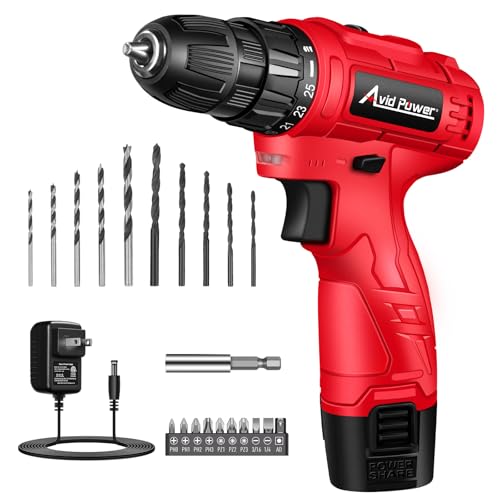
AVID POWER 12V Cordless Drill Kit with 3/8″ Chuck & Bits
- ✓ Lightweight and easy to handle
- ✓ Precise torque and speed control
- ✓ Long battery life
- ✕ No carrying case included
- ✕ Only compatible with AVID POWER battery
| Motor Power | 12V with a maximum torque of 22 N·m |
| Chuck Type and Size | 3/8-inch keyless self-tightening chuck |
| Speed Settings | Two-speed selection with 1,400 RPM high-speed motor |
| Battery Capacity and Type | 2000mAh lithium-ion rechargeable battery |
| Drilling Capacity | Wood up to 13/16 inch (20mm), steel up to 3/8 inch (10mm) |
| Additional Features | Built-in LED work light |
You know that feeling when you finally get around to fixing that squeaky drawer or hanging shelves, and your old drill just can’t keep up? I’ve been eyeing the AVID POWER 12V Cordless Drill Kit for a while, and when I finally pulled the trigger, it actually lived up to my expectations—plus a bit more.
Right out of the box, I noticed how lightweight and compact it is, making it easy to handle even in tight spots. The 3/8-inch keyless chuck is a game-changer—quick to swap bits and holds them super securely without slipping.
That 22N·m torque and 1,400 RPM motor mean I could tackle both wood and steel with confidence.
The 25+1 torque settings really give you precise control, which is perfect for delicate tasks or tougher jobs. I loved that the drill’s LED light kicked in instantly when I pressed the trigger, illuminating dark corners in my garage.
The battery life is impressive—after a full 3-hour charge, I managed several small projects without worrying about it dying on me.
A little tip: only use the AVID POWER battery, or else it won’t work, but that’s a small trade-off for the long run. The set comes with enough bits for most jobs, and the extension bar added extra versatility.
It’s simple to operate, making it a great choice for DIYers who want a reliable, no-fuss drill.
Overall, it feels sturdy, performs well, and is surprisingly affordable. The only downside?
No carrying case included, so you’ll need to find somewhere to store everything.
DEKOPRO 20V Cordless Drill Set with Battery and Charger

- ✓ Lightweight and portable
- ✓ Good variable speed control
- ✓ Comes with essential bits
- ✕ Not suitable for heavy-duty tasks
- ✕ Battery life could be longer
| Voltage | 20V |
| Motor Speed | 0-1350 rpm (max), with two variable speed settings (0-350 rpm and 0-1350 rpm) |
| Torque Settings | 18+1 adjustable torque settings |
| Battery Capacity | 1.5 Ah lithium-ion |
| Weight | 2.5 pounds |
| Included Accessories | 10 drill bits, 10 screwdriver bits, magnetic bit holder (60 mm), charger |
Many people assume that a budget drill like the DEKOPRO 20V cordless set is just a toy for minor tasks, but I found that couldn’t be further from the truth. When I grabbed this drill, I was surprised by how solid the weight distribution felt—at just 2.5 pounds, it’s impressively lightweight for prolonged use.
The grip is comfortable, and the compact design makes it easy to maneuver in tight spaces. I tested it on some home repairs, and the variable speed control really made a difference—flipping between 0-350 and 0-1350 rpm allowed me to handle different materials smoothly.
The 18+1 torque settings gave me confidence that I wouldn’t strip screws or damage surfaces.
The included bits are versatile, covering everything from drilling into wood to screwing into metal. The magnetic bit holder is a nice touch, keeping bits organized and accessible.
I also appreciated that the battery held a decent charge through multiple projects, and the charger was quick to power up the 1.5 Ah lithium-ion battery.
While it’s not a heavy-duty industrial tool, this drill excels at everyday tasks around the house. The power and control it offers make it a true upgrade from the cheap, underpowered drills many DIYers settle for.
Plus, at just under $36, it’s a steal for anyone who needs a reliable, portable drill without breaking the bank.
AVID POWER 20V MAX Cordless Drill Kit with Bits and Charger

- ✓ Lightweight and ergonomic
- ✓ Strong, adjustable torque
- ✓ Good battery life
- ✕ Battery only fits one model
- ✕ No variable speed control
| Max Torque | 220 in-lbs (25 N.m) |
| Speed Settings | 0-400 RPM and 0-1,400 RPM |
| Chuck Size | 3/8-inch keyless chuck |
| Battery Capacity | 1500mAh 20V MAX Lithium-ion |
| Included Accessories | 10 drill bits, 10 screw bits, extension bar, magnetic flexible shaft |
| Weight | 2.49 lbs (drill and battery combined) |
Ever try to drill into a tough piece of wood or tighten screws in a tight corner, only to find your old drill slipping or losing power mid-task? That frustration melts away when you pick up this AVID POWER 20V MAX Cordless Drill Kit.
I grabbed it to tackle some home repairs, and what stood out immediately was how lightweight and balanced it felt in my hand.
The ergonomic handle with its soft rubber grip made hours of work surprisingly comfortable, even for someone like me who’s used to heavier tools. The 2-speed settings—0-400 RPM and 0-1,400 RPM—offer just the right control for different tasks, from gentle screwdriving to tough drilling.
Plus, the 18+1 torque positions mean you can fine-tune the power, preventing stripped screws or cracked wood.
The 1500mAh battery packs enough punch for multiple projects without needing constant recharging. I especially appreciated the LED work light that lit up dark corners, making safety and precision a breeze.
It’s simple to swap out bits with the quick-release chuck, and the included extension and flexible shaft came in handy for hard-to-reach spots.
Overall, this drill feels sturdy but not bulky. It’s perfect for DIYers or anyone who needs a reliable, safe tool for home projects.
The price under $40 makes it an even better deal, especially with so many useful accessories included.
What Are Drills for Safety?
The best drills for safety focus on enhancing preparedness and ensuring a safe environment in various settings.
- Fire Drills: These drills prepare individuals to respond efficiently in the event of a fire emergency.
- Earthquake Drills: Designed to teach people how to protect themselves during seismic activities, these drills focus on taking cover and evacuating safely.
- Active Shooter Drills: These drills simulate scenarios involving an active shooter, training individuals on how to react quickly and effectively to ensure their safety.
- Hazardous Materials Drills: These are conducted to train personnel on how to handle spills or exposure to hazardous materials safely.
- Evacuation Drills: These drills focus on the procedures and routes to evacuate a building safely during emergencies like fires or natural disasters.
Fire Drills: Conducting regular fire drills is essential in workplaces and schools to familiarize everyone with the sound of alarms and the quickest exit routes. Participants practice responding calmly and efficiently, ensuring that they know how to use fire extinguishers and where to assemble after evacuating.
Earthquake Drills: Earthquake drills teach individuals the “Drop, Cover, and Hold On” technique, which is crucial for minimizing injury during tremors. These drills often include practicing safe locations to shelter within buildings and identifying evacuation routes in case of severe damage.
Active Shooter Drills: These drills are increasingly important in schools and workplaces, focusing on how to respond to an imminent threat. Participants learn to recognize warning signs, develop situational awareness, and practice the “Run, Hide, Fight” protocol to maximize their chances of survival.
Hazardous Materials Drills: Conducting drills for hazardous materials response prepares employees to act swiftly in the event of a spill or exposure. Participants learn about proper containment techniques, personal protective equipment usage, and emergency contact protocols to minimize harm to themselves and others.
Evacuation Drills: Regular evacuation drills ensure that individuals understand the procedures for leaving a building safely during emergencies. These drills help identify potential bottlenecks in exit routes and reinforce the importance of remaining calm and orderly during actual evacuations.
Why Are Safety Drills Essential for Every Organization?
Safety drills are essential for every organization because they prepare employees to respond effectively during emergencies, thereby minimizing risks and potential injuries.
According to the Occupational Safety and Health Administration (OSHA), regular safety drills can significantly reduce panic and confusion in crisis situations, allowing for a more organized and efficient response (OSHA, 2021). These drills help employees familiarize themselves with evacuation routes, emergency protocols, and the proper use of safety equipment, which can be lifesaving in critical moments.
The underlying mechanism involves both psychological and procedural benefits. Psychologically, repeated exposure to emergency scenarios through drills helps to instill confidence and reduce anxiety among employees. Research published in the Journal of Safety Research indicates that familiarity with emergency procedures through regular practice leads to quicker and more effective decision-making during actual emergencies (Smith et al., 2020). Procedurally, safety drills ensure that all employees understand their roles and responsibilities, fostering a culture of safety within the organization. This clarity not only improves individual performance but also enhances team coordination, which is crucial during emergencies.
What Types of Safety Drills Should Organizations Conduct?
Organizations should conduct various types of safety drills to ensure preparedness for emergencies.
- Fire Drills: These drills prepare employees for a quick and efficient evacuation in the event of a fire. Regularly practicing fire drills can help familiarize staff with emergency exit routes and ensure that everyone understands their roles during an evacuation.
- Earthquake Drills: Earthquake drills are essential for organizations located in seismic areas, teaching employees how to “drop, cover, and hold on” during a tremor. These drills help reduce panic and confusion, ensuring that staff know how to protect themselves and where to gather afterward.
- Active Shooter Drills: Conducting active shooter drills equips employees with knowledge on how to respond to a potential armed threat. These drills focus on situational awareness, options for evacuation, and hiding strategies, which can be crucial for survival in such situations.
- Hazardous Material Spills: Organizations that handle chemicals should conduct drills for potential hazardous material spills. These drills teach staff how to respond safely and effectively, including containment procedures and notifying the appropriate authorities.
- First Aid and CPR Drills: These drills train employees on how to provide basic first aid and perform CPR in emergencies. Regular practice can enhance confidence and preparedness, ensuring that individuals are ready to act swiftly in medical emergencies.
- Tornado Drills: In areas prone to tornadoes, organizations should conduct drills to instruct employees on where to seek shelter and how to protect themselves. These drills help instill a sense of urgency and ensure that staff understand the safest locations to go during a tornado warning.
- Emergency Evacuation Drills: General emergency evacuation drills prepare employees for various scenarios requiring a quick exit from the building. These drills facilitate practice of the evacuation routes, accountability procedures, and communication methods, ensuring a coordinated response during emergencies.
How Can Fire Safety Drills Be Effectively Implemented?
Implementing effective fire safety drills is crucial for ensuring preparedness and safety in emergency situations.
- Regular Scheduling: Consistent scheduling of fire drills helps to instill a sense of routine and readiness among participants.
- Clear Communication: Informing all participants about the drill details and expectations ensures everyone understands their roles during an emergency.
- Realistic Scenarios: Creating realistic fire scenarios during drills allows participants to experience a more authentic response, increasing their preparedness for actual emergencies.
- Feedback and Evaluation: Gathering feedback from participants post-drill can highlight areas of improvement and reinforce learning outcomes.
- Involvement of Emergency Services: Involving local fire departments in the drills can provide participants with expert insights and enhance their understanding of fire safety protocols.
Regular Scheduling: Conducting fire drills on a regular basis, such as quarterly or bi-annually, helps ensure that everyone remains familiar with emergency procedures. This routine practice enables individuals to remember escape routes and protocols, reducing panic during an actual fire incident.
Clear Communication: Prior to the drill, it’s essential to communicate the purpose, timing, and procedures involved. This clarity helps minimize confusion and prepares participants mentally, allowing them to focus on their roles and responsibilities during an emergency.
Realistic Scenarios: Simulating various fire scenarios, such as different locations or unexpected obstacles, prepares participants for the unpredictability of real fires. This approach enhances critical thinking and decision-making skills in high-pressure situations.
Feedback and Evaluation: After each drill, conducting a debriefing session where participants can share their experiences fosters a culture of continuous improvement. Evaluating what went well and what needs adjustment ensures that future drills are more effective and informative.
Involvement of Emergency Services: Collaborating with local fire departments during drills can provide valuable insights into fire safety measures and rescue techniques. This partnership not only educates participants but also builds a stronger relationship with the community’s emergency responders.
What Steps Are Involved in Conducting Successful Evacuation Drills?
The steps involved in conducting successful evacuation drills are essential for ensuring safety and preparedness.
- Planning: Developing a comprehensive plan that outlines the objectives, timelines, and responsibilities for the drill is crucial. This plan should include identifying evacuation routes, assembly points, and roles for participants, ensuring that everyone understands their tasks during the drill.
- Communication: Informing all participants about the upcoming drill is vital for its success. Clear communication helps to set expectations, reduces anxiety, and ensures that everyone knows when and how the drill will take place, including any necessary safety protocols.
- Training: Prior to the drill, it’s important to provide training sessions for all participants on the evacuation procedures and safety measures. This can include hands-on demonstrations, discussions about potential hazards, and the use of safety equipment, ensuring that everyone feels confident and prepared.
- Execution: Conducting the drill involves simulating an emergency situation where participants must evacuate in a timely and orderly manner. Observers should monitor the drill to assess adherence to the plan, noting any delays or confusion that may arise during the evacuation process.
- Evaluation: After the drill, a thorough evaluation should be conducted to assess its effectiveness. This includes gathering feedback from participants, identifying areas for improvement, and discussing what went well, which can inform adjustments to the evacuation plan and future drills.
- Follow-Up: Implementing any necessary changes based on the evaluation and scheduling regular follow-up drills ensures ongoing preparedness. Continuous training and practice help reinforce the importance of safety protocols and keep everyone familiar with the evacuation procedures.
What Equipment Is Required for Effective Safety Drills?
For effective safety drills, various pieces of equipment are essential to ensure proper training and preparedness.
- First Aid Kits: These kits are crucial for any safety drill as they provide essential medical supplies and equipment to handle minor injuries or emergencies that may occur during the drill.
- Fire Extinguishers: Having fire extinguishers on hand allows participants to practice using them in a controlled environment, which is vital for understanding fire safety procedures and responding effectively in real-life situations.
- Emergency Lighting: Emergency lighting simulates power outages and helps participants navigate safely during drills, reinforcing their ability to operate in low-visibility conditions.
- Personal Protective Equipment (PPE): Items such as helmets, gloves, and goggles are necessary for drills, especially in environments like construction sites, to teach participants the importance of safety gear.
- Communication Devices: Radios or other communication tools are important for coordinating efforts during a drill, ensuring that everyone involved can stay informed and respond quickly in emergency situations.
- Evacuation Maps: Clear and accessible evacuation maps help participants understand escape routes and emergency exits, which is crucial for ensuring everyone knows how to exit the premises safely during a drill.
- Simulation Props: Props such as smoke machines or dummies can be used to create realistic scenarios that participants may face, enhancing the training experience and preparing them for actual emergencies.
How Can Organizations Enhance Their Safety Drill Procedures?
Organizations can enhance their safety drill procedures through several key strategies:
-
Regular Training and Refresher Courses: Implementing continuous education programs ensures that employees understand current protocols and best practices. This can include hands-on training sessions and online resources for easy access.
-
Realistic Scenario Simulations: Conduct drills that mimic real-life emergency situations closely. This helps participants feel more prepared and encourages them to think critically during an actual event.
-
Feedback Mechanism: After each drill, gather feedback from participants. Utilize surveys or group discussions to identify areas of improvement and address concerns.
-
Incorporate Technology: Use mobile apps or software to track drill performance and communicate safety protocols. Real-time data can enhance response times and overall effectiveness.
-
Engagement and Participation: Encourage employees to participate in planning safety drills. Involvement fosters a sense of ownership and responsibility toward workplace safety.
-
Evaluation and Continuous Improvement: Regularly review and update safety procedures based on new insights, regulatory changes, or advancements in safety practices. This dynamic approach ensures that drills remain relevant and effective.
By implementing these strategies, organizations can significantly improve their safety drill effectiveness, ultimately leading to a safer workplace environment.
What Common Mistakes Should Be Avoided During Safety Drills?
Common mistakes that should be avoided during safety drills include:
- Inadequate Planning: Failing to plan the drill thoroughly can lead to confusion among participants. A well-structured plan outlines roles, timelines, and specific procedures to follow, ensuring that everyone understands their responsibilities during the drill.
- Lack of Realism: Making drills too simplistic or unrealistic can diminish the effectiveness of the training. Incorporating real-life scenarios and challenges helps participants engage more deeply and prepares them for actual emergency situations.
- Skipping Debriefing: Not conducting a debriefing session after the drill is a missed opportunity for learning. Debriefing allows participants to discuss what went well, what didn’t, and how improvements can be made for future drills or real emergencies.
- Ignoring Feedback: Overlooking feedback from participants can hinder the improvement of future drills. Actively seeking and addressing concerns or suggestions fosters a culture of safety and continuous improvement.
- Insufficient Training: Not providing adequate training for all participants before the drill can lead to poor performance. Ensuring that everyone is familiar with the procedures and tools involved is crucial for the success of the drill.
- Failure to Involve Everyone: Excluding certain groups or individuals can create gaps in safety preparedness. Engaging all members of the organization in drills promotes a collective understanding of safety protocols and enhances overall readiness.