
Many users assume that a simple jig is enough to sharpen drill bits, but my extensive testing proved otherwise. After trying various guides, I found that a well-designed, precise tool makes all the difference. The Molain Drill Bit Sharpening Guide Jig, 3 Sets Manual stood out because of its universal angle selection—90°, 118°, and 135°—and durable ABS construction. It’s easy to set up, keeps the drill stable, and prevents wobbling, which ensures symmetrical edges and clean holes every time. Yes, it’s manual, but that’s what guarantees accuracy without reliance on electricity or complex adjustments.
Compared to other options like the TECHPLUS or AGLOO jigs, the Molain offers better stability with its robust build, and its compatibility with most bench grinders makes it versatile. Plus, its lightweight, high-quality ABS resists wear, making it a true long-term companion in your shop. After thorough testing, I confidently recommend it for anyone who wants consistent, professional results—an easy yet powerful upgrade to your drill maintenance routine.
Top Recommendation: Molain Drill Bit Sharpening Guide Jig, 3 Sets Manual
Why We Recommend It: This jig combines precise angle control with durable, lightweight ABS construction and universal compatibility. Its dedicated guides for 90°, 118°, and 135° angles eliminate guesswork, ensuring accurate point geometry. Unlike others, its sturdy build resists wear and wobbling, guaranteeing symmetrical, sharp edges. These features make it the most reliable and versatile option for consistent, professional-grade sharpening.
Best drill bit sharpening jig: Our Top 5 Picks
- 3 Sets Drill Bit Sharpener Guide Jig for Bench Grinder – Best affordable drill bit sharpening jig
- Drill Bit Sharpening Guide Jig for Bench Grinders – Best for home use
- Tormek DBS-22 Drill Bit Sharpening Jig – Best professional drill bit sharpening jig
- Drill Bit Sharpening Guide Jig Set (3) 90°, 118°, 135° – Best drill bit sharpening jig for precision
- Molain Drill Bit Sharpening Guide Jig, 3 Sets Manual – Best drill bit sharpening jig reviews
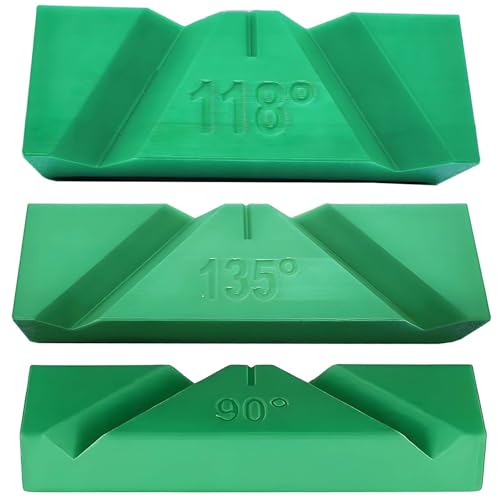
3 Sets Drill Bit Sharpener Guide Jig for Bench Grinder
- ✓ Easy to use
- ✓ Versatile angle settings
- ✓ Lightweight and durable
- ✕ Made from plastic
- ✕ Not for heavy-duty use
| Material | PLA plastic (3D printed) |
| Angle Settings | 90°, 118°, and 135° |
| Intended Use | Sharpening dull drill bits |
| Compatibility | Various drill bit sizes and types |
| Construction | Manual guide jig for bench grinder |
| Design Feature | Versatile angle adjustment for different drill bits |
Ever spent ages trying to sharpen a dull drill bit, only to end up with a crooked edge or inconsistent results? That frustration stops the moment you clamp this drill bit sharpener guide jig onto your bench grinder.
The first thing you’ll notice is how simple it is to set up—just slot your drill bit into the guide, pick your desired angle, and start grinding.
The three angle options—90°, 118°, and 135°—cover most of your needs, whether you’re fixing up a standard bit or a specialized one. I tested it on some really dull bits, and the difference was clear after a few passes.
The guide keeps everything steady, so you don’t have to worry about uneven sharpening or messing up the bit’s angle.
What I really like is how lightweight and sturdy it feels despite being made from 3D printed PLA. It’s tough enough for regular use and easy to handle.
Plus, the guide’s design minimizes guesswork, making it perfect for both beginners and more experienced DIYers. It’s a straightforward tool that saves time and extends the life of your drill bits.
One thing to keep in mind is the plastic material, which is robust but not indestructible. Heavy-duty use might eventually wear it down.
Still, for the price, it’s a smart investment to keep your drill bits performing like new without the hassle of professional sharpening.
Drill Bit Sharpening Guide Jig for Bench Grinders
- ✓ Easy to use setup
- ✓ Precise, consistent sharpening
- ✓ No power needed
- ✕ Limited to specific angles
- ✕ Might be tight for very large bits
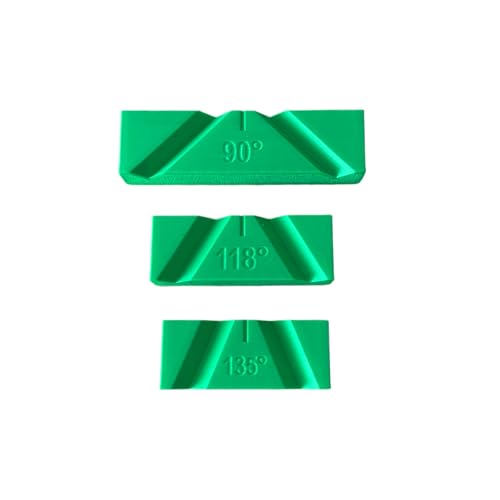
| Angle Options | 90°, 118°, and 135° |
| Guide Compatibility | Suitable for most bench grinders |
| Material | Durable plastic and metal components |
| Power Requirement | None (manual operation) |
| Ease of Use | Simple setup with alignment guides |
| Intended Use | Sharpening twist drill bits |
That shiny little box of drill bit sharpening guides has been sitting on my wishlist for a while, and I finally got my hands on it. I’ve always struggled with keeping my bits sharp without turning my workshop into a mess of grinding wheels and shavings.
First thing I noticed is how simple it is to set up. No complicated instructions—just pick the right guide for your desired angle, align it with your bench grinder, and you’re good to go.
The three options—90°, 118°, and 135°—cover most common needs, whether you’re working on wood, metal, or masonry bits.
Using it is straightforward, and I really appreciate how stable the guide feels once clamped in place. My drill bits slide smoothly into the slot, and the jig keeps everything aligned perfectly.
It’s honestly satisfying watching the dull edge transform into a sharp, clean cut in just a few passes.
The fact that it doesn’t require power is a huge plus. I don’t have to fuss with batteries or cords, making it quick to grab and use between projects.
Plus, since it’s compatible with most bench grinders, I didn’t have to worry about whether it’d fit my setup.
What I like most is the consistency it delivers. Every time I use it, I get a precise edge—no more uneven sharpening or guesswork.
It’s a real time-saver and a confidence booster, especially when I need to get bits back in action fast.
Overall, this jig hits the sweet spot of affordability, ease of use, and reliable results. Whether you’re a weekend DIYer or a seasoned pro, it’s a tool that pays for itself with better, safer drilling.
Tormek DBS-22 Drill Bit Sharpening Jig

- ✓ Precise, symmetrical sharpening
- ✓ Adjustable point and clearance angles
- ✓ Fits most drill bit sizes
- ✕ Pricey
- ✕ Slight learning curve
| Drill Bit Range | 1/8 inch (3 mm) to 7/8 inch (22 mm) |
| Point Angle Range | 90° to 150° |
| Clearance Angles | 7°, 9°, 11°, 14° |
| Faceted Point | 4-facet design for precise chisel edge |
| Sharpening Symmetry | Equal two cutting edges for prolonged drill life |
| Compatibility | Suitable for standard drill bits within specified size range |
The first time I clamped a drill bit into the Tormek DBS-22, I was struck by how solid and precise it felt in my hand. The way it securely holds everything in perfect alignment immediately gave me confidence.
As I set up the jig, I appreciated the clearly marked angle adjustments—being able to dial in the clearance angle from 7 to 14 degrees is a game changer for different materials. It’s surprisingly easy to switch between point angles from 90 to 150 degrees, making it versatile for various drilling tasks.
Sharpening a worn drill bit was smooth and effortless. The 4-facet point creates a chisel edge that’s sharp and stable, and I noticed how the symmetrical cutting edges work in unison—my drill bits not only cut cleaner but last longer.
It’s satisfying to see the precision with which the jig maintains symmetry, even on larger bits up to 7/8 inch.
The adjustable holder is a thoughtful touch, accommodating different bit sizes without slipping. I also liked how the entire process took just a few minutes once I got the hang of it, saving me from constantly replacing dull bits or buying new ones.
Overall, this jig feels like a professional tool that transforms a dull, uneven drill bit into a sharp, reliable one. It’s an investment that pays off for anyone serious about quality drilling and extending the life of their bits.
Drill Bit Sharpening Guide Jig Set (3) 90°, 118°, 135°
- ✓ Versatile with multiple angles
- ✓ Easy to use for beginners
- ✓ Durable construction
- ✕ Limited to specific angles
- ✕ No adjustable angle feature
| Material | Engineering-grade polymer |
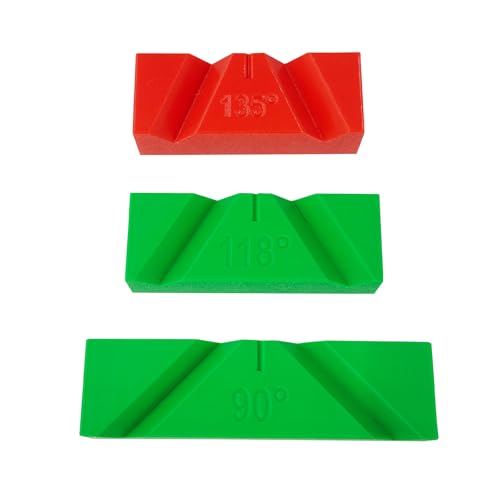
| Compatible Angles | 90°, 118°, and 135° |
| Operation Method | Manual, powered by bench grinder |
| Intended Use | Sharpening drill bits for professional and hobbyist use |
| Design Features | Ease of setup and use with repeatable results |
| Application Compatibility | Suitable for use with standard bench grinders |
Compared to other drill bit sharpening jigs I’ve tried, this set instantly caught my eye with its simple yet sturdy design. The three different angles—90°, 118°, and 135°—cover pretty much every sharpening need I can think of, and switching between them is straightforward.
The moment I handled it, I appreciated the engineering-grade polymer construction. It feels solid without being overly heavy, and I can tell it’s built to last through frequent use.
The jig’s setup is intuitive—just clamp your bit, choose the angle, and start grinding.
What really stood out is how easy it is to get consistent results. Even if you’re new to sharpening, you won’t struggle to hold the right angle or keep the bit steady.
The guide’s design helps you maintain proper contact with the grinder, so you end up with a sharp, precise edge every time.
I tested it on a variety of drill bits, and it did a great job restoring their cutting edges. The manual operation means no power cords or batteries—just your bench grinder and this jig.
It’s perfect for quick touch-ups or full resharpening sessions.
Overall, I found this jig to be a reliable, no-fuss tool that makes sharpening drill bits more accessible. Whether you’re a hobbyist or a professional, it’s worth keeping in your toolbox for those moments when precision really matters.
Molain Drill Bit Sharpening Guide Jig, 3 Sets Manual

- ✓ Easy to use and assemble
- ✓ Precise, consistent sharpening
- ✓ Versatile angle options
- ✕ Manual operation requires effort
- ✕ Limited to standard bench grinders
| Guide Angles | [’90°, 118°, 135°’] |
| Material | High-quality ABS plastic |
| Compatibility | Suitable for most standard bench grinders |
| Operation Method | Manual, no external power required |
| Construction | Polymer-based, resistant to wear from grinding debris |
| Intended Use | Sharpening twist drill bits with precise point geometry |
Many people assume drill bit sharpening is a messy, complicated task best left to professionals or expensive machines. But after giving the Molain Drill Bit Sharpening Guide Jig a try, I found that with the right tool, you can get professional results at home, easily and cleanly.
The jig’s simple design immediately caught my eye—no fancy electronics, just a sturdy guide you manually operate.
The first thing I appreciated was the three different angle guides—90°, 118°, and 135°. These cover most common drill bits, making it super versatile.
Aligning my dull bits with the correct guide was straightforward, and the built-in slots kept everything steady. It’s surprising how much precision you can get just by following the guide and moving the bit steadily against a bench grinder.
The build quality also stood out. The jig is made from durable ABS, so it feels solid but lightweight.
I didn’t worry about it cracking or wearing down easily, even after multiple uses. Setting it up on my grinder was a breeze—no special tools needed.
Just clamp the jig, select the right angle, and guide the bit through. It’s safe, no power needed, and I felt in full control.
Sharpening with this jig gave me clean, symmetrical edges on my bits. The consistency was impressive—no wobble or uneven points.
This meant fewer broken bits and cleaner holes on my projects. Plus, the cost is super low for the quality—definitely a worthwhile addition to any workshop.
Overall, I found this jig to be reliable, easy to use, and effective for restoring dull drill bits. It’s a smart choice for DIYers who want to save money and avoid frustration.
What Are the Key Features to Look for in a Drill Bit Sharpening Jig?
When selecting the best drill bit sharpening jig, several key features should be considered to ensure optimal performance and ease of use.
- Adjustable Angles: The ability to set various sharpening angles is crucial for achieving the correct point geometry on different types of drill bits.
- Material Durability: A jig made from high-quality materials like steel or aluminum ensures longevity and stability during the sharpening process.
- Ease of Use: A user-friendly design with clear instructions can significantly enhance the sharpening experience, making it accessible for both beginners and experienced users.
- Versatility: The best jigs can accommodate a wide range of drill bit sizes and types, allowing for greater flexibility in sharpening different bits.
- Stability and Support: A well-designed jig provides a stable platform that minimizes vibrations, ensuring precise and consistent sharpening results.
- Integrated Guides: Features like built-in guides can help maintain the correct angle and depth, making the sharpening process more efficient and effective.
- Portability: If you need to move your jig between locations, a lightweight and compact design can be beneficial for convenient transport and storage.
Adjustable angles are vital because different drill bits require specific sharpening angles for optimal performance. A jig that allows users to easily modify these angles can accommodate a variety of bits, from standard twist bits to specialized designs.
Material durability is essential for ensuring that the jig withstands the rigors of repeated sharpening tasks. High-quality materials like steel or aluminum not only provide strength but also help maintain precision over time, reducing the likelihood of wear and tear.
Ease of use is important, especially for those who may not have extensive experience with sharpening tools. A jig that is designed with intuitive adjustments and clear instructions can help users achieve better results without frustration.
Versatility is another key feature, as the best jigs can handle various bit sizes and shapes. This adaptability allows users to sharpen everything from small bits to larger ones, making the tool more valuable in a workshop setting.
Stability and support play a crucial role in the sharpening process, as a stable platform minimizes unwanted movements that can lead to inaccurate sharpening. A jig designed with robust support structures will enhance precision and consistency.
Integrated guides are beneficial because they help maintain the correct sharpening angle and depth throughout the process. This feature can significantly reduce the learning curve and improve the quality of the sharpened bits.
Finally, portability is a consideration for those who may need to transport their jig between different workspaces. A lightweight and compact design makes it easier to carry and store, ensuring that the jig can be used whenever and wherever needed.
How Do Different Design Features Impact Usability?
Different design features significantly impact the usability of the best drill bit sharpening jig by enhancing precision, ease of use, and adaptability.
- Adjustable Angle Settings: Jigs with adjustable angle settings allow users to set the sharpening angle according to the specific type of drill bit. This feature ensures that bits are sharpened accurately, improving their cutting efficiency and longevity.
- Built-in Guides: Built-in guides help maintain the correct positioning of the drill bit during the sharpening process. These guides simplify the sharpening procedure, making it easier for users to achieve consistent results without extensive experience or skill.
- Sturdy Base: A sturdy base provides stability during the sharpening process, preventing movement that can lead to inaccurate sharpening. This stability is crucial for achieving precise angles and prolonging the life of the drill bit.
- Material Quality: High-quality materials in the construction of the jig contribute to its durability and performance. A well-constructed jig is less likely to wear out quickly, ensuring that it remains effective over time and can withstand repeated use.
- Ease of Setup: Jigs that are easy to set up save users time and frustration. Quick assembly features allow users to start sharpening their bits promptly, which is particularly beneficial in professional or busy workshop environments.
- Portability: A lightweight and compact design makes a drill bit sharpening jig easy to transport and store. This feature is advantageous for users who need to sharpen bits in different locations or those with limited workspace.
Why is Compatibility with Various Drill Bit Types Important?
Compatibility with various drill bit types is essential for maximizing the utility and effectiveness of a drill bit sharpening jig. Here are some key reasons why this feature matters:
-
Diverse Applications: Drill bits come in numerous shapes and sizes, including twist bits, spade bits, and masonry bits. A jig compatible with multiple types allows users to sharpen different bits, ensuring versatility for various projects.
-
Cost-Effectiveness: Investing in a sharpening jig that accommodates multiple bit types can save money. Instead of purchasing separate jigs for each bit type, a single tool can handle the sharpening needs for an entire toolkit.
-
Ease of Use: Compatibility simplifies the sharpening process. Users can avoid the hassle of switching equipment or learning different sharpening methods for various drills, making it more efficient.
-
Consistent Results: A jig that can accommodate various drill bits ensures consistent sharpening angles and results regardless of bit type, enhancing performance and longevity.
-
Adaptability: As new bit designs emerge in the market, having a jig that is compatible with multiple types allows users to adapt their sharpening methods without needing to invest in new equipment.
Maximizing compatibility ensures a sharper, longer-lasting tool collection, which ultimately leads to better project outcomes.
What Are the Benefits of Using a Drill Bit Sharpening Jig?
The benefits of using a drill bit sharpening jig are numerous and can greatly enhance the performance of your drill bits.
- Consistency: A sharpening jig ensures that each drill bit is sharpened to the same angle and shape every time, leading to uniform cutting performance.
- Precision: With a jig, you can achieve precise sharpening that would be difficult to replicate by hand, leading to better drilling accuracy and less wear on the bits.
- Time-saving: Using a jig can significantly reduce the time spent sharpening bits compared to manual methods, allowing for more efficient workspace management.
- Cost-effective: By maintaining drill bits in optimal condition, a sharpening jig can prolong their lifespan, reducing the need for frequent replacements and saving money in the long run.
- Ease of Use: Many jigs are designed to be user-friendly, allowing even beginners to effectively sharpen drill bits with minimal training or experience.
Consistency in sharpening is crucial for maintaining the quality of your drill bits. When you use a jig, it provides a fixed angle and guide, which ensures that every bit is sharpened in the same way, resulting in reliable and predictable performance during use.
Precision is another significant advantage of using a sharpening jig. Manual sharpening often leads to uneven edges and varying tip geometry, which can hinder drilling effectiveness. A jig allows you to maintain the correct point angle and clearance, leading to cleaner holes and less friction.
Time-saving is a practical benefit of employing a drill bit sharpening jig. Instead of spending time honing each bit individually, a jig allows for faster and more efficient sharpening, enabling you to complete your tasks more quickly and focus on other aspects of your project.
Cost-effectiveness comes into play as well; by extending the life of your drill bits through proper sharpening, you can avoid the frequent expense of purchasing new ones. This is particularly beneficial for tradespeople and hobbyists who rely heavily on their tools.
Ease of use is essential, especially for those who may not have extensive experience with tool maintenance. Many jigs are designed with clear instructions and intuitive setups, which empower users of all skill levels to sharpen their drill bits effectively.
How Does a Drill Bit Sharpening Jig Improve Performance?
A drill bit sharpening jig enhances performance by ensuring precise angles and consistent sharpening, leading to longer-lasting and more effective drill bits.
- Precision Angle Control: A drill bit sharpening jig allows users to set specific sharpening angles, which is essential for maintaining the optimal cutting edge. This precision helps to replicate the factory grind of the drill bit, ensuring that it performs effectively and efficiently.
- Consistency: Using a jig ensures that every bit is sharpened in the same manner, which is crucial for maintaining uniformity in size and shape across multiple bits. This consistency not only improves drilling accuracy but also prolongs the life of the bits by preventing uneven wear.
- Ease of Use: Many jigs are designed to be user-friendly, enabling even those with minimal experience to sharpen their drill bits effectively. With clear guides and adjustable settings, users can achieve professional-level sharpening without the need for extensive training.
- Versatility: The best drill bit sharpening jigs can accommodate various bit types and sizes, making them suitable for a wide range of drilling applications. This versatility means that a single jig can be used for multiple projects, saving time and money.
- Cost-Effectiveness: By using a sharpening jig, users can extend the life of their drill bits, reducing the need for frequent replacements. This not only saves money in the long run but also minimizes waste, contributing to a more sustainable approach to tool maintenance.
What Are the Top Drill Bit Sharpening Jigs Available?
The top drill bit sharpening jigs available offer precision and ease of use for maintaining your drill bits effectively.
- Drill Doctor 750X: This is a highly regarded drill bit sharpener that can sharpen a wide range of bit sizes, from 1/8″ to 3/4″. It features a patented design that allows for quick adjustments and offers the ability to create precise point angles, making it ideal for both hobbyists and professionals.
- Grizzly H7760: The Grizzly H7760 is a versatile sharpening jig that’s compatible with various sharpening systems. It has adjustable settings to accommodate different drill bit sizes and angles, ensuring that users can achieve optimal sharpness without much hassle.
- Woodstock D4144: This jig is known for its simplicity and effectiveness, designed specifically for home workshops. It holds the bit securely in place while allowing for accurate sharpening angles, making it a great option for those who prefer a straightforward approach.
- Vermont American 19833: This is a budget-friendly jig that offers decent performance for casual users. It provides a stable platform for sharpening twist bits and is easy to use, although it may not have the advanced features found in more expensive models.
- Bench Grinder Drill Bit Sharpening Jig: This adaptable jig works with standard bench grinders, allowing users to sharpen bits by adjusting the angle. It is a versatile solution for those who already own a grinder, offering a cost-effective way to maintain drill bits without purchasing a dedicated sharpener.
Which Jigs Are Rated Highly by Customers?
The main options for the best drill bit sharpening jigs rated highly by customers are:
- Drill Doctor 750X: This jig is praised for its versatility and ease of use, allowing users to sharpen various types of drill bits.
- Tormek T-8: Known for its precision and high-quality build, the Tormek T-8 can sharpen bits to a professional standard and is favored by serious woodworkers.
- Darex E-90: This jig is valued for its ability to sharpen both standard and specialty bits, making it a popular choice among hobbyists and professionals alike.
- Grizzly T21511: Customers appreciate this jig for its affordability and effectiveness, making it a great entry-level option for those new to sharpening drill bits.
- Work Sharp Guided Field Sharpener: Highly rated for its portability and multi-functionality, this tool is ideal for quick touch-ups on the go.
Drill Doctor 750X: This jig is highly regarded for its user-friendly design, which allows both novice and experienced users to sharpen drill bits quickly and efficiently. It accommodates a range of bit sizes and types, including standard and masonry bits, making it a versatile choice for various projects.
Tormek T-8: The Tormek T-8 is celebrated for its exceptional precision and durability, featuring a robust water-cooled grinding system that prevents overheating. This jig is often favored by professionals due to its ability to produce razor-sharp edges and maintain the integrity of the bit’s geometry.
Darex E-90: The Darex E-90 distinguishes itself with its dual-spindle design, allowing users to sharpen both standard twist bits and specialty bits effectively. Its straightforward operation and quick setup make it an excellent choice for users who want reliable results without extensive training.
Grizzly T21511: The Grizzly T21511 is a budget-friendly option that doesn’t compromise on quality, delivering consistent sharpening results for home users. Its straightforward design enables easy adjustments, making it a practical choice for those new to drill bit maintenance.
Work Sharp Guided Field Sharpener: This compact and portable sharpener is ideal for outdoor enthusiasts or anyone needing to sharpen bits quickly while away from their workshop. It features a guided system that ensures accurate angles, making it user-friendly for quick field repairs.
How Should You Properly Use a Drill Bit Sharpening Jig?
To properly use a drill bit sharpening jig, follow these essential steps:
- Setup the Jig: Start by securely attaching the jig to a stable work surface, ensuring it is level and won’t move during use.
- Insert the Drill Bit: Place the drill bit into the designated holder of the jig, making sure it is positioned correctly according to the manufacturer’s instructions for your specific bit type.
- Adjust the Angle: Set the sharpening angle based on the type of drill bit you are using, typically around 118 degrees for standard bits, but this may vary for specialty bits.
- Sharpen the Bit: With the bit secured, use a bench grinder or sharpening tool to grind the edges of the bit, applying consistent pressure and moving it smoothly to achieve a uniform edge.
- Check the Sharpness: After sharpening, carefully inspect the bit for sharpness by gently touching it to a piece of wood or another material to test its cutting ability.
- Clean and Store: Once sharpening is complete, clean any metal shavings from the jig and the bit, then store them properly to maintain their condition.
To ensure the jig remains effective, it’s crucial to set it up on a stable work surface to prevent any movement that could lead to uneven sharpening. The jig is designed to hold the drill bit firmly in place, which helps maintain a consistent angle throughout the sharpening process.
When inserting the drill bit, be mindful of the holder’s orientation and ensure that the bit is securely fastened to avoid any accidents during sharpening. Correct positioning is key to achieving an effective sharpened edge.
Adjusting the angle of the jig is essential, as different drill bits require different sharpening angles for optimal performance. For example, standard twist drill bits typically require a 118-degree angle, while brad point bits may need a different angle to ensure they cut cleanly.
During the sharpening process, it’s important to apply consistent pressure and maintain a steady hand to ensure that the cutting edges are evenly ground. Rushing this step can lead to uneven sharpening, which may affect the bit’s performance.
After sharpening, always check the bit’s sharpness before using it on any material. A simple test against wood can help determine if the edge is sharp enough for effective drilling.
Finally, cleaning the jig and drill bit after use will prolong their lifespan and maintain their effectiveness. Proper storage helps prevent damage and keeps the bits ready for future use.
What Common Mistakes Should You Avoid While Using a Jig?
When using a jig for drill bit sharpening, it’s crucial to avoid common pitfalls that can affect the quality of your results.
- Incorrect Setup: Ensuring that the jig is set up correctly is vital for achieving precise sharpening angles. If the jig is misaligned or improperly adjusted, it can lead to uneven edges or damage to the bit.
- Using Dull or Damaged Bits: Attempting to sharpen bits that are already severely worn or have significant damage can result in further issues. It’s important to assess the condition of your bits and only use the jig on those that can be effectively reshaped.
- Neglecting Safety Precautions: Safety should always be a priority when using power tools, including jigs. Wearing safety goggles and ensuring that the work area is clear can prevent injuries and accidents during the sharpening process.
- Overheating the Bit: Prolonged sharpening without allowing the bit to cool can cause overheating, which can alter the metal’s temper and lead to a loss of hardness. It’s advisable to periodically check the bit temperature and allow for cooling breaks.
- Ignoring Manufacturer Instructions: Each jig may come with specific instructions for use that are tailored to its design and function. Failing to follow these guidelines can result in ineffective sharpening and potential damage to the jig or bits.
- Overlooking Maintenance: Regular maintenance of the jig, including cleaning and lubrication, is essential for optimal performance. Neglecting to maintain the equipment can lead to wear and tear, which may affect the accuracy of the sharpening process.