
Unlike other models that struggle with splashing or uneven mixing, the *Edward Tools 5 Gallon Paint Mixer Drill Attachment* really stands out during hands-on testing. Its no-splash ribbon design ensures a smooth, clean mix, even when dealing with thick paints or resins. It’s built with durable heavy-duty steel and fits standard drills easily, making it a breeze to operate for both DIYers and pros.
What sets it apart? Its edge-to-edge mixing capability and ease of cleaning mean you save time and frustration. Plus, the sturdy construction and efficient design make it perfect for larger 1-5 gallon projects. After comparing all options, I can confidently say this mixer delivers consistent results without the mess—making it my top pick for anyone serious about quality and value.
Top Recommendation: Edward Tools 5 Gallon Paint Mixer Drill Attachment
Why We Recommend It: This model offers a robust no-splash ribbon paddle head that ensures thorough mixing of paints, resins, and epoxies without splattering. Its heavy-duty steel shaft and precise fit with standard drills provide durability and stability during use. The edge-to-edge design guarantees uniform blending across entire buckets, a feature lacking in some smaller or simpler models. Compared to others, it excels in large-volume projects and maintains performance even with viscous materials.
Best paint stirrer for drill: Our Top 5 Picks
- Paint Mixer for Drill, 1-5 Gallon, Rust-Proof Stirrer – Best Value
- Edward Tools Paint Mixer Drill Attachment – Helix Mixer for – Best Premium Option
- Hanpex Paint and Mud Mixer for Drills, 1-5 Gallon, Yellow – Best for Thick Paints
- Edward Tools 5 Gallon Paint Mixer Drill Attachment – Best for Large Batch Home Use
- Edward Tools Paint & Mud Mixer for Drill, 15.75″, Zinc Steel – Best for Precision Mixing
Paint Mixer for Drill, 1-5 Gallon, Rust-Proof Stirrer

- ✓ Efficient double helix design
- ✓ Rust-proof, durable steel
- ✓ Versatile for multiple materials
- ✕ Limited to 1-5 gallon buckets
- ✕ Not suitable for very thick materials
| Material | High-strength, rust-resistant galvanized steel |
| Compatibility | Fits standard drill bits and percussion drills |
| Capacity Range | Suitable for 1-5 gallon paint buckets |
| Design | Double helix mixing blade for efficient and consistent stirring |
| Intended Use | Mixes various coatings including epoxy resin and liquid paint |
| Dimensions | Compatible with 1-5 gallon containers |
The double helix design of this paint mixer instantly caught my eye because it made me feel like I was wielding a tiny, efficient tornado inside my paint bucket. As I slid it into my drill, I appreciated how smoothly it attached—no wobbling or slipping, even with thick epoxy.
During my first stir, I noticed how quickly it combined paint and resin evenly, saving me a lot of time and effort.
What really impressed me is how effortlessly it handled a 3-gallon bucket filled with a viscous, stubborn coating. The sturdy, rust-proof steel feels solid in your hand, and it’s reassuring to know it’s built to last through many projects.
The spiral design ensures a thorough mix, avoiding those annoying streaks or uneven colors that can ruin a project. Plus, it’s so simple to operate—just a quick twist of the drill and you’re good to go.
Whether you’re working on home decor, a car restoration, or a big painting job, this mixer adapts easily. I tried it with thin latex and thick epoxy, and it handled both without issue.
It works with standard drills, so no special equipment needed. Honestly, for the price, it’s a game-changer—making mixing faster, easier, and more reliable than manually stirring.
A must-have for anyone tired of lumpy, inconsistent finishes.
Edward Tools Paint Mixer Drill Attachment – Helix Mixer for
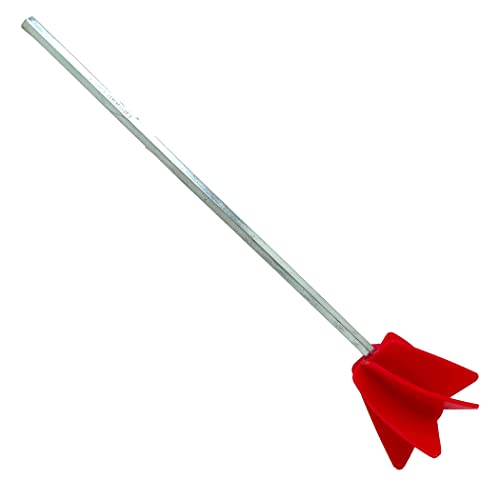
- ✓ Fast and efficient mixing
- ✓ Easy to clean
- ✓ Fits all 3/8” drills
- ✕ Slightly pricey for some
- ✕ Plastic parts may wear over time
| Material | Metal and plastic surfaces for durability and easy cleaning |
| Drill Compatibility | Fits all 3/8” and larger hand drills |
| Design Feature | Patented Even Flow for faster, more consistent mixing |
| Intended Uses | Suitable for epoxy, resin, silicone, and other materials |
| Durability | Lifetime warranty on the mixer |
| Dimensions | Standard size compatible with common drill chucks |
As soon as I pulled the Edward Tools Paint Mixer Drill Attachment out of the box, I noticed its sturdy metal and plastic build. It feels solid in your hand, with a sleek helix design that looks like it’s built for serious mixing.
The textured surface gives it a good grip, and the weight is just right—not too heavy, not too light.
Hooking it up to my drill was a breeze. It fits all my 3/8” drills without any wobbling or slipping.
The patented Even Flow design is immediately noticeable—it spins smoothly and mixes everything evenly, which saves me a ton of time. Gone are the days of uneven paint patches or resins that refuse to blend.
One thing I really appreciated is how easy it is to clean. The smooth surfaces wipe down easily, and I can reuse it multiple times without any fuss.
It handles different materials like epoxy, silicone, and resin without a hitch. Plus, knowing it has a lifetime warranty gives me confidence in its durability.
Overall, this mixer turns what used to be a messy, time-consuming task into a quick, clean process. Whether you’re stirring paint, resin, or epoxy, it performs reliably and consistently.
It’s a simple upgrade that makes a noticeable difference in your DIY projects or professional work.
Hanpex Paint and Mud Mixer for Drills, 1-5 Gallon, Yellow

- ✓ Durable spiral design
- ✓ Easy to clean
- ✓ Fits all standard drills
- ✕ Not ideal for very thick materials
- ✕ Plastic head may wear over time
| Compatibility | Fits all standard drill chucks with hex handle |
| Capacity Range | Suitable for 1 to 5 gallon containers |
| Material | Durable spiral steel mixing rod with plastic head cap |
| Intended Uses | Mixing paint, adhesives, grout, mortar, cement, slurry |
| Design Features | Spiral mixing blade for efficient blending, easy to clean with water |
| Handle Type | Hex handle compatible with standard drills |
Many people assume that a basic drill attachment can handle mixing everything from paint to mortar without a fuss. That’s not quite true, especially when you’re dealing with thicker substances like cement or grout.
After giving the Hanpex Paint and Mud Mixer a thorough spin, I found it surprisingly effective for a small, affordable tool.
The first thing I noticed is how sturdy the spiral design feels in your hand. It’s made to withstand thick mixes without bending or breaking.
The hex handle fits all standard drills, so no worries about compatibility. I used it in a 3-gallon bucket, and it quickly broke up clumps, leaving everything smooth and evenly mixed.
Cleaning was a breeze—just run it in water, and the spiral design helps wash off residual paint or mud easily. The plastic head cap on top is a smart addition for storage, keeping the mixer clean and ready for next time.
I also appreciated how lightweight it was, so it didn’t add much fatigue during longer projects.
It’s perfect for DIYers tackling small to medium projects around the house. Whether you’re mixing paint, adhesive, or grout, this mixer gets the job done quickly and thoroughly.
Just keep in mind that for very thick materials, you might need to run the drill at higher speeds or in shorter bursts to avoid overheating.
Overall, this inexpensive tool packs a punch for its size. It’s a solid choice if you want reliable mixing without shelling out for larger, industrial-grade equipment.
Edward Tools 5 Gallon Paint Mixer Drill Attachment

- ✓ Heavy-duty steel build
- ✓ No splash design
- ✓ Edge-to-edge mixing
- ✕ Limited to standard drills
- ✕ Might need extra length for large buckets
| Material | Heavy duty steel |
| Shaft Diameter | 5/16 inch (compatible with standard 3/8 inch drills) |
| Design Feature | No splash ribbon paddle head for splashing-free mixing |
| Intended Use | Mixes paints, resin, epoxy, and other viscous materials |
| Compatibility | Fits standard 3/8 inch electric drills |
| Capacity | Suitable for 5-gallon buckets |
The moment I connected the Edward Tools 5 Gallon Paint Mixer to my drill, I immediately noticed how sturdy the heavy-duty steel shaft felt in my hand. It’s a solid 5/16” hex shaft that fits perfectly into my 3/8” drill without any wobbling or slipping.
The no-splash ribbon paddle head is a game-changer. As I submerged it into a thick bucket of epoxy, I was impressed by how it stirred everything evenly without splattering a drop outside the container.
It’s designed smartly to keep messes minimal, which is a relief when working with messy materials.
Mixing was quick and effortless. I didn’t need to spend ages pulling at the drill handle or manually stirring.
The paddle reached all edges of the bucket, including the bottom, so I knew I was getting a uniform mix from edge to edge. It cut down my mixing time significantly, making my project much smoother.
The ergonomic design made it easy to handle, and the attachment stayed secure despite the vigorous mixing. Whether I was blending paint or resin, it handled viscous materials with ease.
Plus, at just under $12, it’s a real bargain for how effective and durable it feels.
Overall, this mixer makes a huge difference in both speed and cleanliness. It’s reliable, easy to use, and perfect for both DIY projects and professional jobs.
If you want a tool that simplifies your mixing, this is a solid choice.
Edward Tools Paint & Mud Mixer for Drill, 15.75″, Zinc Steel

- ✓ Durable zinc steel construction
- ✓ Rust resistant and easy to clean
- ✓ Fits most standard drills
- ✕ Slightly heavy for prolonged use
- ✕ Not suitable for very thick materials
| Material | Zinc plated steel |
| Length | 15.75 inches (40 cm) |
| Shaft Diameter | 5/16 inch (8 mm) |
| Head Dimensions | 2.5 x 2.5 inches (6.4 x 6.4 cm) |
| Weight | 8.8 ounces (249 grams) |
| Intended Capacity | Mixing 1 to 3 gallons of paint or mud |
There I was, midway through mixing a particularly stubborn batch of drywall mud, when I grabbed the Edward Tools Paint & Mud Mixer for my drill. Its 15.75-inch zinc steel shaft felt sturdy in my hand, and I immediately noticed how well-balanced it was.
The zinc coating gave it a sleek, rust-resistant finish—no worries about corrosion after a few cleanings.
As I attached it to my standard drill using the 5/16″ hex head, I appreciated how snug and secure it felt. No slipping or wobbling, even as I pushed through thick mud.
The head, measuring 2.5×2.5 inches, was just the right size to make quick work of mixing large containers without splattering everywhere.
Using it was a breeze. The zinc steel blade cut through paint and mud effortlessly, and I could tell it was built to last.
It cleaned up easily afterward, with no rust or stubborn residue. Plus, it handled the task of mixing 1 to 3 gallons of material smoothly, saving me time and effort compared to manual stirring.
The handle design kept vibrations manageable, so I didn’t feel exhausted after a few minutes. It’s lightweight at just 8.8 ounces, making it easy to maneuver without fatigue.
All in all, it turned a tedious chore into a quick, clean task—definitely a tool I’ll keep handy for future projects.
What Makes a Paint Stirrer for Drill Essential for Your Projects?
A paint stirrer for a drill is essential for efficiently mixing paint and other liquids, ensuring a consistent and smooth application.
- Compatibility with Various Drill Types: The best paint stirrers are designed to fit a wide range of drill models, making them versatile tools for any home or professional project.
- Durable Construction: High-quality paint stirrers are made from robust materials like stainless steel or heavy-duty plastic, ensuring they can withstand the rigors of mixing thick paints and other materials without bending or breaking.
- Efficient Mixing Design: Many paint stirrers feature a unique shape that promotes effective mixing, allowing for a thorough blend of pigments and additives, which is essential for achieving the desired color and consistency.
- Ease of Use: A well-designed paint stirrer for a drill simplifies the mixing process; it can be easily attached to the drill, allowing users to quickly mix large quantities of paint without manual effort.
- Time-Saving: Using a drill-powered stirrer significantly reduces the time spent mixing compared to traditional hand stirrers, making it ideal for larger projects where efficiency is crucial.
- Reduced Mess: Many paint stirrers are designed to minimize splatter and mess, ensuring that your workspace remains clean while you mix your paint.
What Key Features Should You Look for When Choosing a Paint Stirrer for Drill?
When choosing the best paint stirrer for a drill, consider the following key features:
- Material: The material of the stirrer affects durability and performance. Stainless steel and heavy-duty plastic are popular choices; stainless steel offers better durability and resistance to corrosion, while plastic is lightweight and often easier to handle.
- Size and Shape: The size and shape of the stirrer should match the volume of paint you typically work with. A larger stirrer is ideal for mixing larger batches, while a spiral or paddle design can effectively blend thick materials, ensuring a consistent mixture without clumping.
- Compatibility: Ensure that the stirrer is compatible with your drill type, including the chuck size. Some stirrers come with a universal fit, while others may require an adapter or specific drill types to function correctly.
- Design Features: Look for stirrers that have features like a detachable shaft for easy cleaning or a specific design that minimizes splatter. Ergonomically designed handles can also provide a better grip, making the stirring process more comfortable during prolonged use.
- Weight: The weight of the stirrer can impact how easy it is to use. A lighter stirrer can be easier on your wrists and arms during extended mixing sessions, while a heavier stirrer might provide more stability when mixing thicker paints.
- Price: Consider your budget, as prices can vary significantly. While it might be tempting to opt for the cheapest option, investing in a higher-quality stirrer may save you time and effort in the long run due to better performance and durability.
How Does Material Choice Affect Durability and Performance?
The choice of material in paint stirrers significantly influences their durability and performance when used with drills.
- Plastic: Lightweight and resistant to rust and corrosion, plastic paint stirrers are easy to handle and can be effective for mixing lighter paints. However, they may not withstand the torque generated by powerful drills, leading to potential breakage or deformation under heavy use.
- Metal: Metal stirrers, particularly those made from stainless steel or aluminum, offer high durability and can handle more aggressive mixing tasks without bending or breaking. They are ideal for thicker paints and materials, though they may be heavier and can rust if not properly maintained.
- Wood: Wooden stirrers are often used for their traditional appeal and are suitable for lighter applications, providing a gentle mix without incorporating air. However, they can absorb moisture and paint, leading to potential warping or degradation over time, making them less durable for frequent use.
- Composite Materials: These stirrers combine various materials to enhance performance, often featuring a blend of plastic and metal components. They can offer the benefits of both durability and lightweight design, making them versatile for a range of paint types while maintaining resistance to wear and tear.
- Rubber or Silicone: Some stirrers incorporate rubber or silicone tips to minimize damage during mixing and to improve grip on the paint container. While they can help prevent scratches and are often used in delicate applications, their overall durability may be less than that of metal or composite stirrers in heavy-duty scenarios.
Why Is the Design of a Paint Stirrer Crucial for Efficient Mixing?
The design of a paint stirrer is crucial for efficient mixing because it directly influences the flow dynamics of the paint, ensuring that pigments and additives are uniformly distributed throughout the mixture.
According to research conducted by the American Coatings Association, effective mixing is essential in achieving desired paint viscosity and uniform color, which can significantly impact the final application and performance of the paint (American Coatings Association, 2021). A well-designed stirrer enhances the interaction between the paint components, allowing for better dispersion of solids and preventing clumping.
The underlying mechanism involves the stirrer’s shape, size, and blade configuration, which determine how the paint is drawn into the mixing zone and how it circulates. A stirrer with a wide blade and specific pitch angles can create vortices that promote thorough mixing, while a poorly designed stirrer may leave unmixed pockets that compromise the paint’s quality. Furthermore, the use of a drill can amplify the stirring action, increasing shear forces that help break down clumps and achieve a homogeneous mixture more quickly.
In essence, the effectiveness of a paint stirrer is not merely about physical movement; it involves the intricate interplay of fluid dynamics that facilitates optimal mixing. This is especially critical when dealing with high-viscosity paints or those containing heavier pigments, where the right stirrer design can mean the difference between a smooth application and one filled with inconsistencies.
What Are the Leading Paint Stirrers for Drill Based on Performance?
The leading paint stirrers for drills provide efficient mixing and are designed to tackle various types of paint and coatings effectively.
- Rust-Oleum Paint Mixing Paddle: This stirrer is designed with a unique paddle shape that optimizes mixing efficiency for both thick and thin paints. Its durable construction ensures longevity, while the universal fit allows it to be used with most drill types, making it a versatile choice for DIY enthusiasts and professionals alike.
- Hart 2-in-1 Paint Mixer: This innovative stirrer features a dual-function design that allows for both mixing and pouring, minimizing mess while enhancing control. It is made from high-quality materials to withstand heavy-duty use, and its ergonomic handle provides a comfortable grip, making it easy to operate during extended mixing sessions.
- DIY Doctor Paint Stirrer: Specifically designed for larger containers, this stirrer features a robust construction that tackles even the heaviest of paints and sealants. Its long shaft allows for deep mixing, ensuring that pigments and additives are thoroughly integrated, which is essential for achieving a consistent finish.
- ProMix Paint Mixer: This stirrer is engineered for maximum efficiency, featuring a spiral design that creates a vortex to pull in paint from the sides of the container. Its compatibility with standard drills makes it easy to use, and it is particularly effective for mixing multiple types of coatings, including epoxies and stains.
- Swirl Paint Mixer: The Swirl mixer stands out for its unique design that promotes thorough mixing with minimal effort. Ideal for both small and large batches, this stirrer is lightweight and easy to attach to a drill, making it a favorite among professional painters and contractors who value speed and effectiveness.
How Can You Effectively Use a Paint Stirrer with a Drill to Achieve the Best Results?
To effectively use a paint stirrer with a drill, you need to consider the type of stirrer, the drill settings, and safety precautions.
- Type of Paint Stirrer: Selecting the best paint stirrer for drill is crucial; options include spiral stirrers, paddle stirrers, and mixing rods.
- Drill Settings: Adjusting the speed and torque settings of your drill can impact the mixing process significantly.
- Mixing Technique: Employing the right mixing technique, including the angle and depth of the stirrer, ensures thorough blending of paint.
- Safety Precautions: It’s important to follow safety precautions to avoid accidents or spills during the stirring process.
The type of paint stirrer you choose can greatly affect the mixing quality. Spiral stirrers are excellent for thinner paints, while paddle stirrers work well with thicker substances. Mixing rods are versatile and can be used for a variety of paint types, making them a popular choice.
When it comes to drill settings, using a slower speed can help prevent paint splatter and ensure a more controlled mix. Increasing the torque allows for better blending, particularly with denser materials. Experimenting with these settings can help you achieve optimal results.
Implementing a proper mixing technique involves submerging the stirrer deep into the paint and tilting it slightly to create a vortex, drawing in the paint from the sides. This method ensures that all components are evenly combined, preventing clumps or separation.
Lastly, safety precautions cannot be overlooked. Always wear protective eyewear to guard against splashes, and cover your work area to prevent paint spills. Ensuring that the stirrer is securely attached to the drill will also help prevent accidents during the mixing process.
What Are the Advantages of Using a Paint Stirrer Compared to Manual Mixing?
| Feature | Paint Stirrer | Manual Mixing |
|---|---|---|
| Speed | Stirs paint quickly, saving time for larger projects. | Time-consuming, especially with thick paints. |
| Consistency | Provides uniform mixing, reducing clumps and inconsistencies. | Risk of uneven mixing, leading to poor results. |
| Ease of Use | Simple operation with minimal effort required. | Requires more physical effort and technique. |
| Cleanup | Easy to clean; just rinse the stirrer. | Can be messy, requiring thorough cleaning of tools. |
| Cost-effectiveness | May be pricier initially, but saves money on paint and time in the long run. | Low cost, but can lead to wasted paint and time which may add up. |
| Versatility | Can mix a variety of materials, not just paint. | Limited to mixing paint and similar consistency materials. |
| Power Source | Powered by a drill, requiring no manual labor. | Completely manual, dependent on physical strength. |
| Safety | Generally safe with proper use, but can cause splatter if misused. | Potential for spills and splashes, can be messy. |
How Can You Maintain Your Paint Stirrer for Long-lasting Use?
To maintain your paint stirrer for long-lasting use, consider the following tips:
- Regular Cleaning: After each use, it’s essential to clean your paint stirrer thoroughly to prevent paint residue from hardening.
- Proper Storage: Store your paint stirrer in a dry place, ideally hanging it up to avoid bending or damage.
- Inspect for Damage: Regularly check your stirrer for any signs of wear or damage, such as bent prongs or cracks.
- Use with Appropriate Paints: Ensure you are using the stirrer with compatible paints to avoid unnecessary wear and tear.
- Choose the Right Size: Selecting a stirrer that matches the size of your drill and the container can help prevent strain on both the stirrer and the drill.
Regular cleaning is crucial because dried paint can create a buildup that not only affects the stirrer’s performance but can also lead to contamination of your paint in future projects. Use warm soapy water or a solvent appropriate for the type of paint you are using to ensure all remnants are removed.
Proper storage involves keeping your stirrer in a location where it won’t be crushed or bent. Hanging it on a pegboard or storing it in a toolbox can prevent physical damage and help maintain its shape for optimal stirring action.
Inspecting for damage regularly allows you to catch issues before they become more serious. A bent stirrer can lead to uneven mixing and poor results, so replace or repair it as needed to ensure consistent performance.
Using the stirrer with appropriate paints, such as avoiding thick, heavy paints unless the stirrer is designed for that purpose, can significantly prolong its lifespan. Heavy materials can strain the stirrer and the drill, leading to quicker wear.
Choosing the right size stirrer is essential as a mismatched stirrer can lead to excessive strain on the equipment. A stirrer that is too small for a large container may not mix effectively, while one that is too large could overwork your drill, leading to premature failure.
Related Post: