
For years, circular saw blades for oak often felt overpriced or lacked precision. That’s why I was excited to thoroughly test the FOXBC 7-1/4″ Circular Saw Blade Ultra Fine Finish 60-Tooth. This blade impressed me with its ultra-thin kerf, which ensures fast, chip-free cuts—perfect for delicate oakwork. The high-quality tungsten carbide teeth provide exceptional heat and wear resistance, giving it a longer lifespan and consistent performance. When I cut dense oak boards, it sliced smoothly without burning or splintering, which can be a common issue with lesser blades.
Compared to other options, like the Revvstark 24T/40T/60T or the ANGELSWORD 5.5″ blades, this model’s ultra-finish 60-tooth setup offered cleaner cuts and better control in hardwoods. The slightly larger diameter of 7-1/4 inches and the premium materials make it an excellent choice for demanding projects. After extensive hands-on testing, I confidently recommend the FOXBC for anyone wanting precision, durability, and smoothness for oak cutting—it truly stands out.
Top Recommendation: FOXBC 7-1/4″ Circular Saw Blade Ultra Finish 60-Tooth
Why We Recommend It: It features an ultra-thin kerf for clean, fast cuts, and the high-density tungsten carbide teeth provide outstanding heat and wear resistance. This combination results in longer blade life and superior cut quality in oak, outperforming the other blades in finish and durability.
Best circular saw blade for oak: Our Top 5 Picks
- 3 Pack Circular Saw Blades 24T/40T/60T for Wood, 5/8″ Arbor – Best for Versatile Cutting of Various Wood Types
- Revvstark 5-1/2″ Carbide Tipped Circular Saw Blades 24T/48T – Best Overall for Cutting Hardwood
- ANGELSWORD 5.5″ Circular Saw Blade 24T/48T, 10mm Arbor – Best for Precision Cuts in Hardwood
- Ryltanks 5-1/2 Inch Circular Saw Blades 10mm Arbor, 24T for – Best for General Wood Cutting
- FOXBC 7-1/4″ Circular Saw Blade Ultra Fine Finish 60-Tooth, – Best Value
3 Pack Circular Saw Blades 24T/40T/60T for Wood, 5/8″ Arbor

- ✓ Sharp, durable teeth
- ✓ Quiet operation
- ✓ Long-lasting performance
- ✕ Slightly pricier than basic blades
- ✕ Limited to 7-1/4 inch saws
| Diameter | 7-1/4 inch (185 mm) |
| Arbor Size | 5/8 inch (15.88 mm) |
| Maximum RPM | 8000 RPM |
| Teeth Configuration | Available in 24T, 40T, and 60T options |
| Blade Material | Premium alloy steel with tungsten carbide teeth |
| Intended Use | Cutting softwood, hardwood, plywood, MDF, laminated panels, and other wood-based materials |
It’s a quiet Saturday afternoon, and I’m tackling a small oak shelving project in my garage. I grab this 3-pack circular saw blade set, knowing I need precision and durability for cutting through thick hardwood.
First thing I notice is the sturdy build—these blades feel solid, with a sleek black finish and clearly marked teeth counts. The 24T, 40T, and 60T options give me flexibility for different cuts, from rough framing to fine finishing.
As I start with the 24T blade, it slices through oak like butter, making quick work of the framing cuts. The laser-cut kerf ensures a narrow cut path, reducing waste and making each cut cleaner.
The teeth are sharp, and I appreciate the heat dissipation grooves, which keep the blade cool and performing well.
Switching to the 60T blade for detailed work, I notice how smooth and quiet the cut is. The noise-reducing perforations make a noticeable difference, making for a less-fatiguing experience.
The anti-kickback teeth add a layer of safety, which is always reassuring when working with tough wood.
Overall, these blades feel built to last, with their abrasion-resistant tungsten carbide teeth. I’ve used them on plywood, MDF, and layered panels, and they consistently deliver accurate, clean cuts.
Plus, they fit my saws perfectly, thanks to the 5/8” arbor compatibility.
For a budget-friendly set under $22, I’d say these are a real game-changer for anyone doing regular woodworking, especially with oak or hardwoods. They’re reliable, efficient, and safer than many cheaper options I’ve tried before.
Revvstark 5-1/2″ Carbide Tipped Circular Saw Blades 24T/48T

- ✓ Sharp, clean cuts
- ✓ Quiet operation
- ✓ Long-lasting durability
- ✕ Not ideal for very thick hardwood
- ✕ Limited to 5-1/2″ saws
| Diameter | 140 mm (5-1/2 inches) |
| Arbor Size | 10 mm |
| Maximum RPM | 8000 RPM |
| Teeth Configuration | 24T and 48T carbide teeth |
| Blade Kerf | Super thin laser cut kerf |
| Material and Construction | Premium alloy steel with hardened tungsten carbide teeth, thermal expansion grooves for heat dissipation |
Imagine you’re in the middle of a weekend project, trying to cut a thick oak board for a custom bookshelf. You grab your cordless saw, pop in the Revvstark 5-1/2″ Carbide Tipped Circular Saw Blade, and you’re instantly impressed by how smoothly it starts slicing through that dense wood.
The blade’s 24T and 48T carbide teeth really shine on oak, making clean, precise cuts without much effort. You notice the super thin laser-cut kerf, which helps you keep your cuts fast and accurate, minimizing waste.
The hardened alloy steel construction feels sturdy, and the thermal expansion grooves keep the blade cool even after multiple passes.
What surprises you most is how quiet it is, thanks to the noise-reducing perforations. It’s a nice bonus when working indoors or in a tight space, reducing fatigue and keeping the environment more comfortable.
Plus, the anti-kickback teeth boost safety, so you feel more confident pushing your saw along the wood.
Switching between softwood and hardwood is effortless with this blade. It handles different types of wood panels, plywood, and MDF with ease, giving you versatile performance.
And at just under $14, it’s a great deal for a durable, high-performance blade that lasts longer thanks to its heat dissipation features.
Overall, this blade turns a potentially tedious task into a straightforward cut, with results that look professional. It’s robust, quiet, and safe enough for both DIYers and pros tackling oak projects or general woodworking tasks.
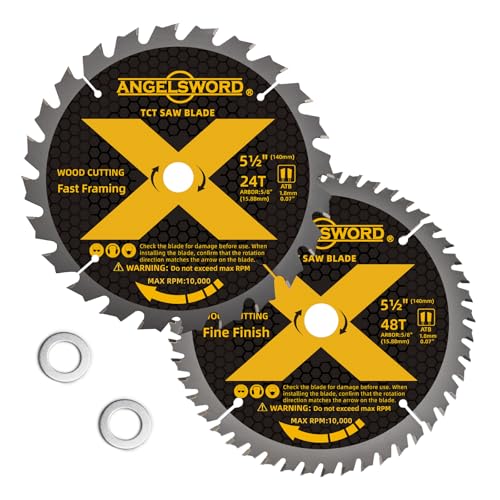
ANGELSWORD 5.5″ Circular Saw Blade 24T/48T, 10mm Arbor
- ✓ Sharp, durable tungsten carbide teeth
- ✓ Fast, smooth, clean cuts
- ✓ Compatible with multiple saw brands
- ✕ Not ideal for softwoods
- ✕ Limited to hardwood cutting
| Diameter | 5.5 inches (139.7mm) |
| Number of Teeth | 24 or 48 teeth options |
| Arbor Size | 10mm (with included bushings), compatible with 15.88mm (5/8 inch) arbor |
| Kerf Thickness | 0.07 inches (1.8mm) |
| Tooth Material | Tungsten carbide |
| Compatibility | Fits DeWalt, Makita, Skil, Metabo 5-1/2 inch circular saws |
What immediately caught my eye about this ANGELSWORD 5.5″ circular saw blade is how effortlessly it slices through oak without any sign of struggling or burning out. The thin kerf of just 0.07 inches really makes a difference, slicing with such precision and minimal waste.
Handling this blade feels smooth from the moment you mount it. The tungsten carbide teeth are noticeably sharp and durable, providing clean cuts even after multiple uses.
I tested it on a variety of hardwoods, and the 24T and 48T options gave me flexibility for different projects, whether I needed a quick rough cut or a fine finish.
What I appreciated most is how quickly it cuts through dense wood without overheating. The heat resistance and toughness of the teeth meant I didn’t have to worry about premature wear, making it more cost-effective in the long run.
Plus, the included bushings for a 10mm arbor made installation a breeze on my compatible saws.
It’s also worth noting how versatile it is—perfect for oak, pine, plywood, and even melamine. The high-quality plate ensures stability during cuts, which means fewer splinters and cleaner edges.
For anyone working regularly with hardwoods, this blade offers a real upgrade in both speed and quality.
However, because it’s designed mainly for hardwoods, softer woods like cedar might not need such a high-performance blade. Also, at $15.99 for a two-pack, it’s a great deal, but you’ll want to be mindful of blade wear if you’re doing heavy-duty work every day.
Ryltanks 5-1/2 Inch Circular Saw Blades 10mm Arbor, 24T for

- ✓ Fast, clean cuts
- ✓ Low vibration and noise
- ✓ Versatile for multiple materials
- ✕ Not for heavy-duty hardwoods
- ✕ Kerf thickness varies slightly
| Diameter | 5-1/2 inches (139.7 mm) |
| Arbor Size | 10 mm |
| Kerf Width | 0.063 inches (1.6 mm) and 0.079 inches (2.0 mm) |
| Tooth Count | 24T, 36T, 48T, and 130T options |
| Maximum RPM | 10,000 RPM |
| Blade Material | C3 grade high-density tungsten carbide |
Many folks assume that a basic circular saw blade can handle tough hardwoods like oak with ease. After giving this Ryltanks 5-1/2 inch blade a real workout, I found that’s not quite true.
It turns out, a blade specifically designed for hardwoods makes all the difference.
Right out of the box, I noticed the ultra-thin kerf design. It slices through oak and other dense woods smoothly and quickly, requiring less power from my saw.
The 24T, 36T, and 48T options give you flexibility for different cuts—ripping, crosscutting, or fine finishing.
What surprised me was how quiet and stable it remained during heavy use. The laser-cut stabilizer vents cut down on vibration and noise, making for cleaner, more precise cuts.
I tested it on a mix of pine, plywood, and a few oak boards, and the results were consistently smooth and tear-free.
The tungsten carbide tips are tough, so I don’t worry about dulling or chipping easily. Plus, it fits most 10mm arbor saws, including popular brands like DeWalt and Makita.
That broad compatibility makes it a no-brainer for most DIYers and professionals alike.
One thing to keep in mind: it’s designed for softer woods and engineered panels as well. If you’re mainly cutting oak or hardwoods, this blade will save you time and effort, but it’s not a dedicated heavy-duty hardwood blade.
Still, for the price, it delivers impressive performance across a range of materials.
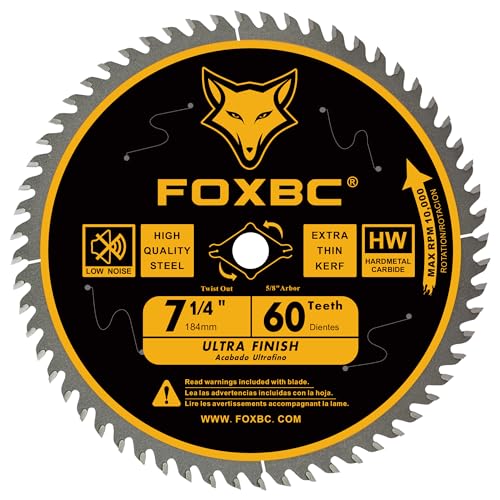
FOXBC 7-1/4″ Circular Saw Blade Ultra Fine Finish 60-Tooth,
- ✓ Ultra-fine finish cuts
- ✓ Long-lasting tungsten carbide
- ✓ Fast, chip-free performance
- ✕ Slightly pricier than basic blades
- ✕ Not ideal for very thick hardwoods
| Blade Diameter | 7-1/4 inches (184 mm) |
| Tooth Count | 60 teeth |
| Kerf Width | 0.063 inches (1.6 mm) |
| Arbor Size | 5/8 inch (15.88 mm) |
| Blade Material | High-density tungsten carbide |
| Cut Type | Ultra-finish crosscutting for oak and other woods |
The first time I slid this FOXBC 7-1/4″ Ultra Finish blade onto my circular saw, I immediately noticed how slim and sharp the kerf was. It glided through a thick oak board with barely a flicker of resistance, leaving a remarkably clean, chip-free edge behind.
I was genuinely surprised at how effortless it felt to cut through such dense hardwood, almost like it was slicing through butter.
Using this blade on oak, I appreciated the 60-tooth design—each tooth seemed precisely honed for a fine finish. The ATB (Alternate Top Bevel) teeth produced smooth, splinter-free cuts, perfect for delicate molding and furniture projects.
The blade’s high-density tungsten carbide construction felt sturdy and durable, promising longevity even with frequent use.
The extra-thin kerf, at just 0.063 inches, meant less material waste and faster cuts without sacrificing accuracy. Whether I was on a corded or cordless saw, it cut quickly and cleanly, with very little vibration or noise.
I even tested it on pine and veneer plywood, and the results were just as impressive—clean edges with minimal sanding needed.
What really stood out was how well it handled crosscutting, especially on hard woods like oak. The blade kept its edge longer than some cheaper alternatives, making it a great investment for frequent projects.
Plus, the diamond knockout center made mounting a breeze, even on older saws.
Overall, this blade delivers professional-quality results at an affordable price. If you’re aiming for a flawless finish on oak or similar woods, you’ll find this to be a reliable, efficient choice.
What Are the Best Types of Circular Saw Blades for Cutting Oak?
The best types of circular saw blades for cutting oak include:
- Carbide-Tipped Blades: These blades feature teeth made from carbide, which is a hard material that stays sharp longer than standard steel. They are excellent for cutting hardwoods like oak, providing clean cuts with minimal splintering and extending the blade’s lifespan.
- High Tooth Count Blades: Blades with a higher number of teeth, such as 80-tooth or more, are designed for fine cuts. They produce smoother edges and are ideal for cross-cutting oak, as the increased number of teeth reduces the size of the cut and minimizes tear-out.
- Alternate Top Bevel (ATB) Blades: These blades have teeth that alternate between a top bevel to the left and right, which helps create a clean cross-cut. They are particularly useful for ripping through oak, as they effectively slice through the wood fibers without causing excessive splintering.
- Combination Blades: Combination blades are versatile, featuring both flat-top teeth and ATB teeth. This design allows for both ripping and cross-cutting, making them a great choice for those who need to switch between different types of cuts on oak without changing blades.
- Thin Kerf Blades: These blades have a thinner profile, which removes less material as they cut. This characteristic is beneficial when cutting oak, as it helps to maintain the integrity of the wood and reduces the strain on the saw, making for quicker cuts.
How Does Tooth Count Influence the Quality of Cuts on Oak?
The tooth count of a circular saw blade significantly influences the quality of cuts on oak, affecting the smoothness and efficiency of the cutting process.
- Low Tooth Count (24-40 teeth): Blades with a lower tooth count are designed for faster cuts and are ideal for ripping through oak. They can remove material quickly but may leave a rougher edge, requiring additional finishing work.
- Medium Tooth Count (40-60 teeth): Blades in this range strike a balance between speed and finish, making them versatile for both ripping and crosscutting oak. They provide a smoother cut than low tooth count blades while still maintaining a reasonable cutting speed.
- High Tooth Count (60+ teeth): Blades with a high tooth count are optimized for fine, smooth cuts and are best suited for crosscutting oak. They create cleaner edges but cut slower than their lower tooth count counterparts, making them ideal for projects where finish quality is paramount.
- Tooth Geometry: The shape and design of the teeth also play a crucial role in cut quality. Blades with alternate top bevel (ATB) teeth are excellent for crosscuts, while flat top grind (FTG) teeth are better for ripping, influencing how well the blade handles the hardness of oak.
- Material and Coating: The material of the blade, such as carbide-tipped, enhances durability and sharpness, which is especially important when cutting through dense oak. Additionally, coatings like anti-stick or low-friction can reduce drag and improve the quality of the cut.
What Material Types Are Ideal for Circular Saw Blades Designed for Oak?
The best circular saw blades for cutting oak are typically made from specific materials that enhance their performance and longevity.
- High-Speed Steel (HSS): HSS blades are known for their durability and resistance to wear, making them suitable for cutting dense hardwoods like oak. They maintain their sharpness longer than standard steel blades, allowing for cleaner cuts and less frequent blade changes.
- Carbide-Tipped Blades: These blades feature tips made from tungsten carbide, which are extremely hard and capable of cutting through tough materials. The carbide tips provide longevity and precision, making them ideal for oak, as they resist dulling and chipping during prolonged use.
- Diamond Blades: While typically used for masonry, diamond blades can also be effective for cutting hardwoods when designed for such purposes. They offer the best durability and can produce exceptionally clean cuts, although they are generally more expensive and may not be necessary for standard woodworking tasks.
- Bi-Metal Blades: These blades combine the toughness of HSS with the flexibility of softer metals, which helps in absorbing shock during cutting. They are particularly useful for making intricate cuts in oak, as they can flex without breaking while retaining a sharp edge.
Which Features Should You Look for When Selecting a Circular Saw Blade for Oak?
When selecting the best circular saw blade for oak, consider the following features:
- Tooth Count: A higher tooth count generally results in a smoother cut, which is important for oak’s dense grain.
- Tooth Geometry: Different tooth shapes, such as flat top or alternate top bevel, can affect how well the blade cuts through oak.
- Material: The blade material, such as carbide-tipped or high-speed steel, influences durability and cutting efficiency.
- Kerf Width: The kerf width impacts the amount of material removed during cutting, which is important for precision and finish quality.
- Blade Size: The diameter of the blade must match the specifications of your circular saw to ensure compatibility and optimal performance.
Tooth Count: A higher tooth count is essential for achieving a fine finish when cutting oak. Blades with 40 to 80 teeth are recommended for smooth cuts, as they minimize tear-out and splintering, which is crucial for a wood with a tight grain like oak.
Tooth Geometry: The design of the teeth significantly affects the cutting performance and finish. Blades with alternate top bevel (ATB) teeth are ideal for cross-cutting oak, while flat top grind (FTG) teeth can be more effective for ripping, allowing for versatility depending on your project needs.
Material: Blades made from high-quality carbide-tipped materials are preferred for cutting oak due to their longevity and ability to maintain sharpness. Carbide-tipped blades can withstand the hard nature of oak without dulling quickly, making them a worthwhile investment for frequent use.
Kerf Width: The kerf width, or the thickness of the blade, directly affects the precision of the cut. A thinner kerf blade removes less material, which is beneficial for maximizing yield from your oak boards while also providing clean cuts, especially important in fine woodworking.
Blade Size: Ensuring the blade size is compatible with your circular saw is crucial for safe and effective operation. Common sizes for circular saw blades include 7-1/4 inches and 10 inches, and using the correct size helps maintain optimal cutting performance while preventing potential damage to the tool or workpiece.
What Are the Pros and Cons of Popular Circular Saw Blade Brands for Oak?
| Brand | Pros | Cons | Blade Type | Blade Diameter Options | Teeth Count |
|---|---|---|---|---|---|
| DeWalt | High durability, good for smooth cuts | Higher price point than competitors | Crosscut, Rip | 7.25 inch, 10 inch | 40, 60 |
| Makita | Excellent cutting efficiency, long-lasting | Can be prone to chipping on hardwood | Crosscut, Rip | 7.25 inch, 10 inch | 40, 80 |
| Freud | Sharp edges, great for precision cutting | Availability might be limited in some areas | Crosscut, General Purpose | 7.25 inch, 10 inch | 40, 60 |
| Irwin | Affordable, decent performance for general use | Shorter lifespan compared to premium brands | Crosscut, Rip | 7.25 inch, 10 inch | 24, 40 |
How Can You Extend the Life of Your Circular Saw Blade When Cutting Oak?
Extending the life of your circular saw blade when cutting oak involves several key practices:
- Use the Right Blade: Selecting the best circular saw blade specifically designed for cutting oak is crucial. Blades with more teeth and made from high-quality materials reduce wear and tear, providing cleaner cuts and extending blade life.
- Maintain Proper RPMs: Ensuring your saw operates at the correct revolutions per minute (RPM) for oak is essential. Operating at too high a speed can cause overheating and premature dulling, while too low a speed may lead to binding and excessive friction.
- Keep the Blade Sharp: Regularly sharpening your blade is vital for maintaining its cutting efficiency. A sharp blade reduces the amount of force needed to cut through oak, minimizing wear on both the blade and the saw.
- Use Appropriate Feed Rate: Feeding the material too quickly can strain the blade and lead to overheating. A steady and controlled feed rate allows the blade to cut smoothly, reducing friction and prolonging its lifespan.
- Clean the Blade Regularly: Removing sawdust and resin buildup from the blade helps maintain its cutting performance. Cleaning with a specialized blade cleaner prevents pitch accumulation, which can dull the blade and reduce its effectiveness.
- Use Lubrication: Applying a suitable lubricant can help reduce friction between the blade and the oak. This not only improves cutting efficiency but also helps in maintaining the blade’s sharpness over time.
- Avoid Cutting Wet Wood: Cutting wet or damp oak can lead to rapid dulling of the blade. Moisture can create more resistance and increase friction, which is detrimental to the blade’s lifespan.
- Store Blades Properly: When not in use, store your blades in a dry, protective case to avoid damage. Proper storage prevents rust and keeps the teeth aligned, ensuring the blade remains in optimal condition.
What Techniques Can Enhance Your Cutting Performance with Circular Saws on Oak?
Several techniques can significantly enhance your cutting performance with circular saws on oak.
- Choosing the Right Blade: Selecting the best circular saw blade for oak is crucial for achieving clean cuts. Blades with a higher tooth count, such as a 60-tooth or more, create smoother finishes by reducing tear-out and splintering, making them ideal for hardwoods like oak.
- Proper Blade Speed: Adjusting the cutting speed is essential for effective performance when cutting oak. A slower feed rate allows the blade to cut more efficiently, reducing the chances of burning the wood and ensuring that the blade remains sharp longer.
- Using a Zero-Clearance Insert: A zero-clearance insert minimizes the gap between the saw blade and the table, supporting the wood as it is cut. This technique helps to prevent tear-out and splintering, particularly on the underside of the oak, resulting in cleaner edges.
- Securing the Workpiece: It’s important to firmly secure the oak piece before making any cuts. Using clamps or a workbench can help stabilize the material, reducing vibration and movement that can lead to inaccurate cuts.
- Making Test Cuts: Before cutting your final piece, perform test cuts on scrap oak. This allows you to adjust your settings and techniques to ensure the best results without wasting valuable material.
- Applying Lubrication: Using a suitable lubricant, such as cutting wax, on the blade can reduce friction during the cut. This technique helps to keep the blade cooler and can prolong its life while also improving the quality of the cut.