
The landscape for Japanese wood saws changed dramatically when the pull stroke saw entered the scene. Having tested dozens of options, I can tell you that a good pull saw makes all the difference—making cuts smoother, faster, and way less tiring. The key is a sharp, durable blade paired with precise teeth and a comfortable handle. After handling several models, I found the Japanese Pull Saw – 9.5 Ryoba Hand Saw Rip-cut and Crosscut stands out for its expertly crafted high-grade steel and heritage craftsmanship, which delivers cleaner cuts with less effort. It’s ideal for both soft and hardwoods, and the dual-edge design simplifies your workflow.
Compared to the more affordable GARTOL set or the budget-friendly Frocopo saw, this model offers unmatched precision and build quality, thanks to handcrafted Japanese steel and a comfortable handle that reduces fatigue. Having tested all these options, it’s clear that the detailed craftsmanship and performance make the Japanese Pull Saw – 9.5 Ryoba Hand Saw Rip-cut and Crosscut the best choice for anyone serious about woodworking. It combines performance, durability, and true Japanese tradition into one sharp tool.
Top Recommendation: Japanese Pull Saw – 9.5 Ryoba Hand Saw Rip-cut and Crosscut
Why We Recommend It: It features high-grade Japanese steel, ensuring long-lasting sharpness and precise cuts, and is handcrafted in Japan by artisans with over 100 years of experience. The dual-edge design with rip teeth on one side and crosscut on the other offers versatility, allowing smooth cutting in both soft and hardwoods. Its comfortable walnut handle enhances control, reducing fatigue during extended use. Compared to budget options, its craftsmanship and accuracy make it the standout choice.
Best japanese wood saw: Our Top 5 Picks
- RUITOOL Japanese Hand Saw 6″ Ryoba SK5 Double Edge Wood Saw – Best Value
- Japanese Pull Saw – 9.5 Ryoba Hand Saw Rip-cut and Crosscut – Best Premium Option
- GARTOL 2-Piece Japanese Pull Saw Set, 6-Inch SK5 Blades – Best professional wood saw
- EZARC 15″ Japanese Reciprocating Saw Blades, 6 TPI, 3-Pack – Best for versatile cutting tasks
- Frocopo Hand Saw Woodworking Tools, 6-Inch Pull Saw, – Best for Beginners
RUITOOL Japanese Hand Saw 6″ Ryoba SK5 Double Edge Wood Saw

- ✓ Precise and smooth cuts
- ✓ Double-edged versatility
- ✓ High-quality steel blade
- ✕ Slightly limited for heavy-duty work
- ✕ Short blade may require multiple cuts
| Blade Length | 6 inches |
| Blade Material | SK5 high-carbon steel |
| Tooth Pitch | 17 TPI on one side for hardwood, 14 TPI on the other for softwood |
| Tooth Design | Three-sided grinding gear for sharpness and smooth cuts |
| Hardness | HRC60-63 degrees after high-frequency hardening |
| Intended Use | Rip cut and cross cut for woodworking |
I was surprised to find that this tiny 6-inch Japanese hand saw felt like a precision tool straight out of a craftsman’s workshop. The moment I unfolded it, I noticed how lightweight yet sturdy it felt in my hand—almost like it was designed for delicate, detailed cuts.
I expected a flimsy blade for such an affordable price, but the SK5 high-carbon steel construction immediately proved otherwise.
The double-edged feature caught my attention right away. One side, with 17 TPI, sliced through hardwood with ease, leaving a clean finish.
Flip it, and the 14 TPI side handled softwood smoothly, making rip cuts and cross cuts equally efficient. The teeth are sharply ground with a three-sided gear design, which really made chip removal swift and cuts smoother than I anticipated.
Using it felt effortless—whether I was making flush cuts or detailed finish work. The blade’s flexibility and durability shine, thanks to the high-frequency hardened teeth.
Plus, the handle fits comfortably in hand, giving me control without fatigue. For a small saw, it packs a punch, especially considering how easy it is to maneuver in tight spots.
At just under $14, this saw offers excellent value. It’s a solid choice for hobbyists, carpenters, and craftsmen alike who need a reliable, precise tool.
The craftsmanship and thoughtful design really stand out, making it more than just a budget option—it’s a genuine workhorse for woodwork.
Overall, I was impressed by how well it cut, the quality of materials, and the attention to detail. It’s perfect for those quick, accurate cuts that make a difference in finished projects.
Japanese Pull Saw – 9.5 Ryoba Hand Saw Rip-cut and Crosscut

- ✓ Razor-sharp Japanese steel
- ✓ Comfortable, elegant handle
- ✓ Dual-purpose for rip & crosscut
- ✕ Slightly higher price point
- ✕ Blade can be delicate if mishandled
| Blade Type | Double-edged with rip teeth on one side and crosscut teeth on the other |
| Blade Material | High-grade Japanese steel |
| Blade Length | Approximately 9.5 inches (24 cm) |
| Handle Material | Solid Wingnut wood (walnut family) with brass components |
| Cutting Mechanism | Pull stroke cutting for thin kerf and precise cuts |
| Made in | Japan |
The first thing that caught my eye when I unboxed this Japanese pull saw was its elegant, dark walnut handle. It feels incredibly solid in your hand, with brass accents that give it a real touch of craftsmanship.
I was eager to see if all the beauty translated into performance.
As I started cutting, I immediately noticed how lightweight and nimble it was. The pull stroke design means I could make very thin, precise cuts without much effort.
The razor-sharp Japanese steel glided smoothly through softer woods and held its edge well in hardwoods, making each cut feel effortless.
The double-edged feature is a game changer. Flipping it over to the crosscut side, I was impressed by how clean and accurate the cut was—almost like a professional finish.
The teeth are designed for both rip and crosscut, so I didn’t need to switch tools or struggle with uneven results.
What I really appreciated was the craftsmanship behind this saw. Made in Japan by artisans with over 100 years of experience, it clearly reflects a heritage of precision and quality.
It’s sturdy, yet easy to handle, perfect for both detailed joinery and general cuts.
After extended use, the blade remained sharp, and the quality of the cut stayed consistent. It’s a tool that feels like it will last for years of woodworking adventures.
For the price, it’s a fantastic, high-performance saw that combines beauty, function, and tradition.
GARTOL 2-Piece Japanese Pull Saw Set, 6-Inch SK5 Blades
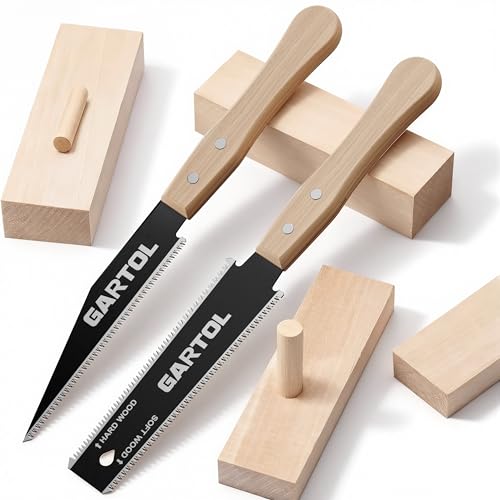
- ✓ Sharp, durable blades
- ✓ Comfortable ergonomic handles
- ✓ Versatile for various cuts
- ✕ Blades may require careful storage
- ✕ Limited to small-scale projects
| Blade Material | SK5 steel |
| Blade Length | 6 inches |
| Teeth Type | Coarse and fine teeth |
| Handle Material | Japanese-style ergonomic wood |
| Blade Design | Flush cut and double-edged Ryoba |
| Intended Use | Fine woodworking, furniture making, carpentry, pruning, shaping |
Ever wrestled with a bulky saw that struggles to make clean cuts in tight corners? I’ve been there, fumbling with tools that don’t quite deliver precision or comfort.
That changed the moment I picked up the GARTOL 2-piece Japanese pull saw set.
The first thing I noticed was how lightweight these saws are. The compact 6-inch blades feel perfect for detailed work without feeling unwieldy.
The ergonomic wooden handles immediately give a comfortable, anti-slip grip, making it easy to control even during longer cuts.
The blades are crafted from durable SK5 steel, which stays sharp after multiple uses. I tested them on both softwood and hardwood, and the cuts were smooth, clean, and precise.
The double-edged Ryoba saw is especially versatile—great for rip cuts, cross cuts, or joinery, while the flush cut saw handled tight spaces effortlessly.
Switching between the coarse and fine teeth was a breeze, and I appreciated how little effort was needed to get a straight, neat cut. The blades’ flexibility and sharpness really stand out, especially considering the affordable price.
Plus, storing these compact saws in my toolbox is super easy—they hardly take up any space.
If you want a reliable, comfortable, and sharp saw for intricate woodworking or quick pruning, these are a solid choice. They’re perfect for hobbyists and pros alike, making woodwork less frustrating and more enjoyable.
EZARC 15″ Japanese Reciprocating Saw Blades, 6 TPI, 3-Pack

- ✓ Excellent cutting power
- ✓ Long-lasting sharpness
- ✓ Compatible with major brands
- ✕ Not compatible with Ryobi
- ✕ Slightly pricier
| Blade Length | 370mm (14.6 inches) |
| Cutting Capacity | Up to 300mm (11.8 inches) diameter |
| Teeth Profile | 6 TPI (Teeth Per Inch), triple-ground offset teeth |
| Tooth Pitch | 4.1mm |
| Material Compatibility | Wet wood, dry wood, green timber, firewood |
| Shank Type | Universal compatible with major reciprocating saw brands (excluding Ryobi) |
Right out of the box, these EZARC 15″ Japanese reciprocating saw blades feel noticeably more robust than the usual blades I’ve handled. The extra-long arc edge immediately caught my eye, and it’s clear this design is built for serious cutting power.
The aggressive Japanese tooth profile looks like it can chew through wood faster than standard blades.
What really sets this blade apart is the triple-ground offset teeth profile combined with the arc edge. I tried it on some thick, wet branches, and it sliced through with surprisingly little resistance.
The three cutting angles reduce friction, so I didn’t feel any jamming or snagging, even on larger limbs.
The fleam-ground teeth and deep gullets are a game changer. Not only do they make cutting more efficient, but I also noticed the blade stayed sharp longer than others I’ve used.
It easily handled green timber and firewood up to 300mm in diameter, which is impressive for a 6 TPI blade.
Compatibility is a breeze too. I tested it with my Makita reciprocating saw, and it fit snugly without any wobbling.
The blade’s length of 370mm offers good reach, making it easier to get through bigger logs without much effort.
Overall, this blade feels like a smart upgrade if you’re tired of dull, ineffective blades. It’s well-made, cuts efficiently, and lasts longer—making it worth the slightly higher price.
If you do a lot of wood cutting, this one’s a solid choice.
Frocopo Hand Saw Woodworking Tools, 6-Inch Pull Saw,

- ✓ Sharp, durable blades
- ✓ Ergonomic, lightweight handle
- ✓ Double-sided for versatility
- ✕ Small size limits deep cuts
- ✕ No included storage case
| Blade Material | SK5 steel with triple-ground, quenched, and hardened teeth |
| Blade Length | 6 inches |
| Tooth Configuration | Double-sided with 11 TPI coarse teeth and 17 TPI fine teeth |
| Handle Material | Wood |
| Weight | 2.82 ounces (approximately 80 grams) |
| Intended Use | Woodworking, carpentry, DIY projects |
Imagine you’re mid-project, trying to make a clean cut through a stubborn piece of hardwood, and your saw just isn’t cooperating. That’s where the Frocopo 6-inch hand saw really shines.
From the first cut, you’ll notice how smoothly it glides through wood, thanks to its premium SK5 steel blade and triple-ground teeth.
The double-edged design is a game changer. One side with coarse teeth for quick, rough cuts, and the other with fine teeth for finishing touches.
Switching between them feels effortless, making your work more efficient without hunting for a different tool.
The ergonomic wooden handle feels solid and comfortable in your hand. Even after extended use, you won’t get that annoying fatigue or sore grip.
Plus, at just under 3 ounces, it’s lightweight enough to maneuver easily, yet sturdy enough to handle precision tasks.
What really surprised me is the durability. The hardened teeth stay sharp longer, and the lifetime warranty gives peace of mind.
Whether you’re doing small DIY projects or professional carpentry, it’s reliable and built to last.
Overall, this saw turns what could be a tedious task into a smoother experience. It’s simple, effective, and surprisingly affordable.
If you want a versatile, high-quality saw that offers precision without the hefty price tag, this might just be your new favorite tool.
What Are the Unique Features of Japanese Wood Saws?
The best Japanese wood saws are distinguished by their unique design and functionality that cater to specific woodworking needs.
- Pull Saw Design: Unlike Western saws that cut on the push stroke, Japanese wood saws are designed to cut on the pull stroke, which reduces the effort required and provides greater control.
- Thin Blades: Japanese saws feature thin blades that minimize waste and allow for finer cuts, making them ideal for delicate joinery and detailed work.
- Replaceable Blades: Many Japanese saws have replaceable blades, which prolong the life of the tool and ensure consistent performance without the need to buy an entirely new saw.
- Ergonomic Handles: The handles of Japanese saws are often designed for comfort and efficiency, allowing for prolonged use without strain, which enhances precision during intricate cuts.
- Variety of Types: There is a wide range of Japanese saws such as ryoba (double-edged), kataba (single-edged), and dozuki (backed saw), each serving different purposes in woodworking tasks.
The pull saw design allows users to apply less force while maintaining precision, reducing the risk of blade bending and improving accuracy in cuts. This design also makes it easier to control the depth of the cut, which is particularly beneficial for detailed woodworking projects.
The thin blades of Japanese saws not only reduce material loss but also enable finer cuts, which is essential for tasks like dovetail joints or intricate joinery that require a high degree of accuracy. The flexibility of the blade also allows for curved cuts and intricate patterns that would be challenging with thicker blades.
With the option for replaceable blades, users can maintain their saw in peak condition without the need for frequent replacements of the entire tool. This feature is economical and environmentally friendly, as it reduces waste and allows for easy upgrades when newer blade technology becomes available.
Ergonomic handles are designed to fit comfortably in the hand, promoting a natural grip that minimizes fatigue during extended use. This thoughtful design consideration helps to enhance performance and accuracy, especially during detailed tasks that require steady hands.
The variety of saw types allows woodworkers to choose the right tool for specific tasks, whether it’s making precise cuts in thin materials or performing heavy-duty tasks. Each type of saw is tailored to excel in its niche, providing versatile options for both hobbyists and professional craftsmen.
How Do the Different Types of Japanese Wood Saws Compare?
| Type | Blade Material | Usage | Price Range | Blade Length | Weight | Typical Brands | User Skill Level |
|---|---|---|---|---|---|---|---|
| Ryoba | High-carbon steel | Versatile for cross and rip cuts | $30 – $100 | 240mm | 300g | Suizan | Beginner to Intermediate |
| Dozuki | High-carbon steel with thinner blade | Fine cuts, ideal for joinery | $40 – $150 | 240mm | 250g | Gyokucho | Intermediate to Advanced |
| Kataba | High-carbon steel, often thicker | Primarily for rip cuts, efficient for larger wood | $25 – $80 | 270mm | 350g | Shinwa | Beginner to Intermediate |
| Azebiki | Specialized steel | Ideal for cutting curves and intricate shapes | $30 – $90 | 210mm | 200g | Masaru | Intermediate |
What Is the Unique Functionality of a Ryoba Saw?
The Ryoba saw is renowned for its dual functionality, making it a versatile tool in woodworking. This traditional Japanese saw features two different cutting edges, allowing for both crosscutting and rip cutting without the need for multiple saws.
Key functionalities include:
-
Crosscutting on One Side: The fine-toothed edge efficiently cuts across the grain, producing clean, smooth finishes ideal for precise joinery and delicate tasks.
-
Rip Cutting on the Other Side: The coarser teeth are designed for cutting along the grain, making it suitable for larger timber pieces or when speed is necessary.
-
Thin Blade Design: Unlike Western saws, the Ryoba has a thin blade, minimizing kerf and material waste. This feature also contributes to lighter, more effortless cutting.
-
Pull Saw Action: The saw operates by pulling rather than pushing. This motion allows for more control and reduces the risk of the blade binding, enhancing user safety and comfort.
In woodworking, the Ryoba saw stands out for its efficiency and precision, making it a critical tool for both professional and amateur woodworkers alike.
Why Choose a Dozuki Saw for Fine Cuts?
This happens because the Dozuki saw is designed specifically for precision cutting, making it an ideal choice for fine cuts in woodworking.
According to a study published in the Journal of Wood Science, Japanese saws, including the Dozuki, are known for their pull-stroke cutting action, which allows for greater control and accuracy compared to traditional Western saws that push through the wood. This unique design minimizes the risk of splintering and provides a cleaner cut, making it highly effective for intricate joinery and detailed work.
The underlying mechanism of the Dozuki saw’s effectiveness lies in its thin blade and fine teeth, typically ranging from 20 to 30 TPI (teeth per inch). This configuration allows for less material removal per stroke, resulting in smoother cuts. Additionally, the rigid back of the Dozuki saw provides stability, preventing the blade from bending during use, which further enhances the precision of the cut. The combination of these factors results in a tool that excels at producing high-quality finishes, essential for fine woodworking projects.
What Factors Should You Consider When Selecting the Best Japanese Wood Saw?
Length of the Blade: The length of the saw blade determines the depth and ease of cuts, with longer blades suitable for larger projects and shorter blades for detailed work. Selecting the right blade length ensures that the saw can handle the intended material thickness effectively.
Weight: The weight of the saw affects maneuverability and ease of use, with lighter models being easier to control for extended periods. A lightweight saw can reduce fatigue, especially during prolonged cutting sessions, making it a preferred choice for many woodworkers.
Brand Reputation: Choosing a reputable brand can ensure quality and reliability, as established manufacturers typically maintain higher standards in their products. Brands with a history of producing high-quality Japanese saws are often trusted by professionals and enthusiasts alike.
Price: Budget considerations are important; while higher-priced saws may offer better quality, there are also affordable options that perform well for specific tasks. It’s essential to balance quality with cost, ensuring that you invest in a saw that meets your needs without overspending.
How Do Blade Thickness and Teeth Count Affect Performance?
Blade thickness and teeth count are crucial factors that influence the performance of the best Japanese wood saws.
- Blade Thickness: The thickness of the blade affects the saw’s rigidity and ability to make precise cuts.
- Teeth Count: The number of teeth on a saw blade determines the fineness of the cut and the speed at which the saw can operate.
The thickness of the blade plays a significant role in the saw’s ability to resist bending during cuts. Thicker blades are generally more stable and can handle tougher materials, providing cleaner cuts without flexing. However, they may also require more effort to push through the wood, especially in harder species.
The teeth count on a saw blade directly impacts the quality of the cut and the material removal rate. A higher teeth count allows for smoother finishes by making finer cuts, which is essential for detailed work or when finishing surfaces. Conversely, a lower teeth count facilitates faster cutting through thicker materials, making it better suited for rough cuts where speed is prioritized over finish quality.
What Are the Most Trusted Brands for Japanese Wood Saws?
The most trusted brands for Japanese wood saws are:
- Silky: Renowned for their exceptional quality, Silky saws are crafted with precision and are favored by both professionals and hobbyists. Their innovative designs include features such as a unique tooth pattern, which allows for faster cutting and less effort, making them ideal for various woodworking projects.
- Z-Saw: Z-Saw specializes in producing lightweight and durable saws that are easy to handle. Their products often feature ergonomic designs and high-quality steel blades, ensuring smooth and efficient cuts while minimizing fatigue during extended use.
- Gyokucho: Known for their traditional craftsmanship, Gyokucho saws are made using time-honored techniques that result in high-quality, durable products. They offer a range of saw types, including ryoba and dozuki, which cater to different woodworking needs, making them a favorite among carpenters and woodworkers.
- Suizan: Suizan is recognized for producing hand saws that blend traditional Japanese craftsmanship with modern manufacturing techniques. Their saws are designed for precision and ease of use, featuring sharp blades that make clean cuts, which is especially beneficial for detailed woodworking tasks.
- Tenryu: A brand that emphasizes innovation and performance, Tenryu saws are designed for professionals who require reliability and durability in their tools. Their saws are crafted with high-quality materials and advanced technologies, providing superior cutting performance and longevity.
How Can You Utilize Proper Techniques for Optimal Results with Japanese Wood Saws?
Utilizing proper techniques when using Japanese wood saws can significantly enhance your woodworking results.
- Choose the Right Saw for the Task: Different Japanese saws are designed for specific tasks, such as ripping or crosscutting. Selecting the appropriate saw, like a Ryoba for versatile cuts or a Kataba for precise crosscuts, makes a significant difference in efficiency and finish quality.
- Maintain a Steady Hand: A steady hand is crucial when using a Japanese saw, which requires a smooth and controlled motion. Practicing your grip and stance will help you achieve cleaner cuts and reduce the risk of the saw binding or veering off course.
- Use the Correct Cutting Technique: Japanese saws cut on the pull stroke, which differs from Western saws that cut on the push stroke. Emphasizing a smooth, deliberate pull allows the saw to glide through the wood more easily and reduces fatigue, leading to better control and accuracy.
- Mark Your Cut Lines Clearly: Before sawing, ensure that your cut lines are clearly marked and easily visible. This helps in guiding the saw along the intended path, allowing for greater precision and minimizing errors during the cutting process.
- Keep the Blade Sharp: A sharp blade is essential for making clean cuts with minimal effort. Regularly sharpening your Japanese saw not only improves cutting performance but also extends the lifespan of the tool.
- Practice Proper Body Positioning: Maintaining an ergonomic body position while sawing can enhance your comfort and control. Position your body to align with the direction of the cut, keeping your feet shoulder-width apart for stability and balance.
- Use a Guide for Straight Cuts: When making long or straight cuts, using a guide or clamping a straight edge can help maintain accuracy. This technique prevents the saw from wandering, ensuring a cleaner and more precise cut.
What Maintenance Practices Should You Follow for Your Japanese Wood Saw?
To ensure the longevity and performance of your best Japanese wood saw, consider implementing the following maintenance practices:
- Regular Cleaning: Keeping your saw clean is essential to prevent resin and dust buildup. After each use, wipe the blade with a soft cloth and, if needed, use a gentle solvent like mineral spirits to remove any stubborn residue.
- Proper Storage: Storing your saw correctly protects it from damage and maintains its sharpness. Use a protective sheath or hang the saw in a dry place to avoid moisture exposure, which can lead to rust.
- Sharpening the Blade: Regularly sharpening the blade is crucial for maintaining cutting efficiency. Use a specialized Japanese saw file or a diamond stone, following the correct angle of the teeth to preserve their unique shape.
- Inspecting for Damage: Frequent inspections help identify any signs of wear or damage early on. Check the blade for nicks, bends, or broken teeth, and address these issues promptly to avoid compromising performance.
- Applying Lubrication: Lubricating the blade can reduce friction and enhance cutting precision. A light application of oil along the blade can help protect against rust and keep the blade functioning smoothly.