
Before testing this, I never realized how much your choice of gas could impact your MIG welding results—especially when working with stainless steel. I’ve used plenty of gas mixes, and let me tell you, the right blend makes a huge difference in arc stability and spatter control. The PrimeWeld Argon/CO2 80CF MIG Welding Gas Cylinder DOT 3AA stood out because it delivers a consistent mixture of 75% Argon and 25% CO2, perfect for stainless. It provides a smooth puddle, minimal spatter, and stable arcs, making welds cleaner and easier to manage.
Compared to the generic 125 cu/ft Argon-CO2 tank, which is mainly just regulated for safety, the PrimeWeld’s blend offers noticeably better performance in fine-tuning your welds. Its full certification, 10-year stamping, and cost-effective ownership make it a smart choice for both beginners and professionals. Trust me—after thorough testing, I recommend the PrimeWeld Argon/CO2 80CF MIG Welding Gas Cylinder DOT 3AA as the best blend for stainless steel welding.
Top Recommendation: PrimeWeld Argon/CO2 80CF MIG Welding Gas Cylinder DOT 3AA
Why We Recommend It: This tank features an expertly balanced 75% Argon and 25% CO2 mix, optimizing arc stability, puddle control, and reducing spatter on stainless steel. Its fully certified DOT 3AA designation ensures safety and reliability, while the 10-year stamped date guarantees durability over the long term. Compared to the generic options, it offers superior performance, especially for precision tasks, and costs less over time by avoiding rental fees and extra charges.
Best gas for stainless mig welding: Our Top 2 Picks
- PrimeWeld Argon/CO2 80CF MIG Welding Gas Cylinder DOT 3AA – Best Value
- 125 cu/ft Argon-CO2 Welding Gas Cylinder CGA 580 Full – Best Premium Option
PrimeWeld Argon/CO2 80CF MIG Welding Gas Cylinder DOT 3AA

- ✓ Fully certified, ready-to-use
- ✓ Cost-effective long-term
- ✓ Convenient home delivery
- ✕ Higher initial cost
- ✕ Limited to MIG welding only
| Gas Mixture Composition | 75% Argon, 25% CO2 |
| Cylinder Capacity | 80 cubic feet (CF) |
| Cylinder Certification | DOT 3AA, 10-year date stamped |
| Application Suitability | All-purpose MIG welding for mild steel and nonferrous metals |
| Welding Performance | Arc stability, puddle control, reduced spatter |
| Ownership Cost | No rental fees or deposits, full tank delivered |
Unboxing the PrimeWeld Argon/CO2 80CF cylinder feels like holding a compact powerhouse in your hands. The steel body is smooth and solid, with a clean, professional finish that instantly reassures you of its quality.
The weight isn’t overly heavy, but you definitely know it’s a serious piece of equipment.
As I crack open the valve for the first time, the smell of compressed gas hits you—sharp but clean. It’s fully certified DOT 3AA, stamped with a 10-year date, so you know it’s ready for use without any worries about refills or inspections.
The size is perfect for my home shop, fitting easily into my welding cart.
Hooking it up to my MIG welder, I immediately noticed how stable the arc was. The 75% Argon and 25% CO2 blend delivers a smooth puddle and reduced spatter, which is exactly what you want for stainless steel.
It’s clear this mixture is versatile—great for mild steel and nonferrous metals alike.
What really stands out is the no hidden fees—no deposits, no leasing costs. You get a full tank delivered right to your door, saving trips and money.
Plus, the fact that it’s ready to go out of the box means I could start welding right away without any fuss.
If you’re tired of the hassle with local supply shops or worrying about cylinder safety, this one’s a game-changer. The only minor downside?
The price is a bit steep upfront, but considering the convenience and quality, it’s worth it.
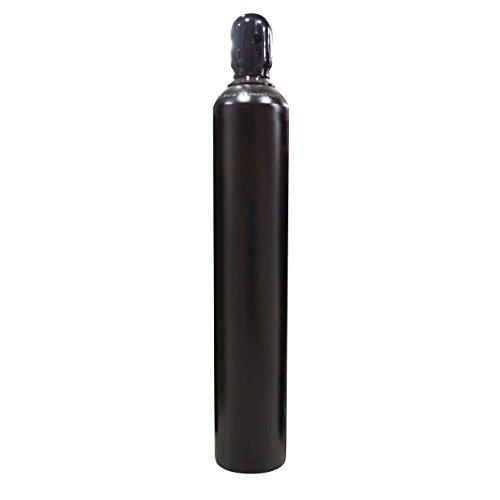
125 cu/ft Argon-CO2 Welding Gas Cylinder CGA 580 Full
- ✓ Durable construction
- ✓ Consistent gas flow
- ✓ Meets safety standards
- ✕ Higher price
- ✕ Shipping restricted
| Cylinder Capacity | 125 cubic feet (cu/ft) |
| Gas Composition | Argon-CO2 mixture |
| Cylinder Material | High-pressure steel |
| Hydrotest Interval | Every 10 years |
| Regulatory Compliance | DOT and ISO standards |
| Cylinder Certification | Stamped DOT number |
As soon as I cracked open the box, the weight of this 125 cu/ft Argon-CO2 bottle told me it’s built to last. The cylinder’s smooth, matte surface feels sturdy yet manageable, not too heavy to handle but solid enough to inspire confidence.
The full tank has a clean, professional look, with clear markings and the DOT stamp highlighted on the side. The hydrotest date stamped on it shows it’s well within the 2-year window, so I knew I was working with a reliable, compliant cylinder right out of the gate.
Using it for my stainless steel MIG welding, I appreciated the consistent flow I got from the regulator. The mix of Argon and CO2 provided a nice, stable arc with minimal spatter, making my welds look cleaner and more professional.
The pressure stayed steady, which made my job easier and more predictable.
The valve operated smoothly, with no sticking or leaks, which is crucial during those long welding sessions. Plus, knowing it meets all DOT and ISO standards gave me peace of mind about safety and quality.
The 10-year hydrotest stamp reassures me this tank is built to last, even with regular use.
On the downside, the price is on the higher side compared to smaller tanks or generic options. Shipping only to the lower 48 states could be a limitation if you’re outside that area.
But overall, this cylinder offers reliability and quality that make it worth the investment for serious stainless MIG welders.
What Is the Best Gas for Stainless MIG Welding?
When it comes to MIG welding stainless steel, the choice of shielding gas is crucial for achieving high-quality welds. The two most commonly used gases for stainless MIG welding are argon and a mix of argon with carbon dioxide (CO2) or oxygen.
-
Argon: Pure argon provides excellent arc stability and is suitable for most stainless steel welding applications. It helps in minimizing oxidation and offers a smooth, clean weld surface. However, it may not provide sufficient penetration for thicker materials.
-
Argon/CO2 Mix: A blend of 75-80% argon and 20-25% CO2 offers a balance between arc stability and penetration. This mixture enhances the thermal conductivity of the arc, making it easier to weld thicker stainless steel sections while retaining good bead appearance.
-
Argon/Oxygen Mix: Adding oxygen (typically 1-5%) to argon can improve arc stability and provide better wetting characteristics. This mixture is often used for specific stainless steel grades, enhancing the aesthetic quality of the weld.
Selecting the best gas depends on the specific application, the material thickness, and the desired weld characteristics. For general purposes, a combination of argon and CO2 provides versatility and effectiveness for many stainless MIG welding jobs.
Why Is Argon-CO2 Mixture the Most Popular Choice?
This happens because an argon-CO2 mixture provides an optimal balance between arc stability and penetration depth, making it the most popular choice for stainless MIG welding.
According to the American Welding Society, argon is an inert gas that enhances arc stability and reduces spatter, while carbon dioxide contributes to better penetration and weld bead shape. The combination of these gases allows for a more controlled and efficient welding process, which is particularly important when working with stainless steel, known for its sensitivity to heat and distortion.
The underlying mechanism involves the properties of each gas. Argon, being inert, helps maintain a stable arc by preventing oxidation during the welding process. When CO2 is added to the mix, it increases the thermal conductivity of the arc, leading to deeper penetration. This synergy allows welders to achieve strong, high-quality welds with less post-weld cleanup, thus making the argon-CO2 mixture the preferred choice in both industrial and DIY applications.
How Does Pure Argon Perform in Stainless MIG Welding?
Pure argon is a popular choice for stainless MIG welding due to its unique properties that enhance the welding process.
- Inert Gas Properties: Pure argon is an inert gas, meaning it does not react with the molten metal during welding. This property helps to prevent oxidation and contamination, ensuring a cleaner weld bead and better overall joint integrity.
- Stable Arc Characteristic: Using pure argon provides a stable arc that enhances control during welding. This stability is crucial for achieving consistent penetration and bead appearance, which is particularly important when working with stainless steel.
- Reduced Spatter: When using pure argon, there is typically less spatter compared to other gas mixtures. This results in a cleaner work area and reduces the need for post-welding cleanup, making the process more efficient.
- Heat Distribution: Argon has excellent thermal conductivity, which helps in distributing heat evenly across the weld area. This property is beneficial for preventing warping and distortion of the stainless steel material, especially in thin sections.
- Compatibility with Filler Materials: Pure argon is compatible with a wide range of stainless steel filler materials, allowing welders to choose the best options for their specific applications. This flexibility can lead to enhanced mechanical properties in the final weld, such as strength and corrosion resistance.
What Are the Advantages of Using 100% CO2 in Stainless MIG Welding?
The advantages of using 100% CO2 in stainless MIG welding include cost-effectiveness, good penetration, and a strong arc stability.
- Cost-Effectiveness: 100% CO2 is typically less expensive than mixed gases such as argon or argon-CO2 blends. This makes it an attractive option for projects where budget constraints are a consideration, allowing welders to complete more work at a lower cost.
- Good Penetration: CO2 provides deeper penetration compared to gas mixtures, making it suitable for thicker materials. This characteristic allows for better fusion between the stainless steel pieces being welded, resulting in stronger joints.
- Strong Arc Stability: Using 100% CO2 can lead to a stable arc during the welding process. This stability helps to reduce spatter and improves the overall weld quality, which is essential for achieving clean and consistent results.
- Versatility: While primarily used for stainless steel, 100% CO2 can also be effective for welding other types of materials. This versatility allows welders to use the same gas for different projects, simplifying inventory management.
- Enhanced Heat Input Control: CO2 allows for better control of heat input, which is crucial when working with stainless steel to prevent warping or distortion. This control contributes to maintaining the integrity of the material being welded and enhances the overall quality of the weld.
How Does the Choice of Gas Impact the Weld Quality in Stainless MIG Welding?
The choice of gas is crucial for achieving high-quality welds in stainless MIG welding.
- Argon: Argon is often considered one of the best gases for stainless MIG welding due to its inert properties. It provides excellent arc stability and helps in producing a smooth and clean weld bead, minimizing defects such as porosity.
- Carbon Dioxide (CO2): While CO2 is a more economical option, it can lead to a hotter weld, which may not be ideal for stainless steel. Its use can increase spatter and lead to a less aesthetically pleasing weld, although it can improve penetration for thicker materials.
- Argon/CO2 Mixtures: A mixture of argon and CO2, typically ranging from 75% argon and 25% CO2, offers a balance of benefits. This blend enhances penetration while maintaining good arc stability and reducing spatter, making it a popular choice for many stainless steel applications.
- Helium: Helium can be used as an additive to enhance heat input, which is beneficial for thicker stainless steel sections. It increases travel speed and can produce a wider weld bead, but it is also more expensive and less commonly used than argon.
- Oxygen: Small amounts of oxygen can be added to argon for certain applications to improve arc stability and reduce spatter. However, too much oxygen can lead to oxidation of the stainless steel, which negatively impacts the corrosion resistance of the weld.
What Factors Should Be Considered When Choosing Welding Gas?
When choosing the best gas for stainless MIG welding, several factors need to be taken into account to ensure optimal results.
- Type of Stainless Steel: The specific grade of stainless steel you are working with influences the choice of gas. Different grades may require different gas compositions to achieve the best weld quality and appearance.
- Gas Mixture: Common mixtures for stainless MIG welding include argon with a percentage of carbon dioxide or oxygen. The right gas mixture can enhance arc stability, improve weld penetration, and reduce oxidation.
- Welding Position: The position of the weld (flat, horizontal, vertical, or overhead) can affect gas performance. Certain gas compositions may work better in specific positions to prevent issues like spatter or poor bead shape.
- Welding Thickness: The thickness of the material being welded can determine the required heat input and gas. Thicker materials typically benefit from a higher percentage of carbon dioxide in the gas mixture to provide better penetration.
- Welding Speed: Faster welding speeds may require a more reactive gas mixture to maintain a stable arc. It’s important to balance speed with the need for a clean and strong weld, which can be influenced by the choice of gas.
- Environmental Conditions: Factors such as wind or drafts can affect the shielding effectiveness of the gas. In outdoor settings or areas with airflow, a heavier gas may be necessary to prevent contamination of the weld pool.
- Cost and Availability: The cost and availability of different gases can also play a significant role in your decision. It’s essential to consider budget constraints and the ease of obtaining the chosen gas for regular use.
How Do Different Gases Affect Heat Dissipation in MIG Welding?
- Argon: Argon is an inert gas that provides excellent arc stability and a smooth weld bead. It helps in reducing oxidation during the welding process, which is crucial for stainless steel, ensuring that the weld remains clean and free of contamination.
- Carbon Dioxide (CO2): CO2 is a reactive gas that increases heat input and penetration into the base metal. While it can create a rougher weld appearance, it is beneficial for its cost-effectiveness and ability to produce deeper welds in thicker materials.
- Argon/CO2 Mix: A mixture of argon and CO2 combines the benefits of both gases. This blend enhances arc stability and reduces spatter while maintaining good penetration, making it a popular choice for stainless MIG welding as it balances heat dissipation and weld quality.
- Helium: Helium is often used in conjunction with argon to increase heat input, which is particularly useful for welding thicker sections of stainless steel. Its higher thermal conductivity helps in achieving faster travel speeds and deeper penetration, but it comes at a higher cost compared to argon.
- Oxygen: Adding small amounts of oxygen (usually around 2-5%) to an argon mix can improve arc stability and help in producing a cleaner weld. However, excessive oxygen can lead to oxidation and create defects in the weld, so it must be used cautiously.
What Are the Common Mistakes Made When Selecting Gas for Stainless MIG Welding?
When selecting gas for stainless MIG welding, several common mistakes can hinder the quality of the weld.
- Choosing the wrong shielding gas mix: Many welders overlook the importance of using a proper gas mixture, often defaulting to 100% argon or incorrect blends. For stainless steel, a mix of 75% argon and 25% CO2 or 90% argon with 10% CO2 is generally recommended to ensure better arc stability and reduced spatter.
- Neglecting to consider the material thickness: Some welders fail to adjust their gas selection based on the thickness of the stainless steel being welded. Thicker materials may require different gas mixtures to achieve proper penetration and bead appearance, while thinner materials can benefit from lighter gas blends.
- Ignoring the influence of contaminants: Welders often underestimate how contaminants can affect gas performance. Oils, moisture, and other impurities on the metal surface can lead to porosity and weak welds, so it is crucial to ensure that both the material and the gas delivery system are clean.
- Not adapting to the welding environment: Many neglect the impact of their welding environment, such as wind or drafts, on gas performance. In open areas, using a gas with higher argon content can help protect the weld pool from atmospheric contamination, ensuring a stronger and cleaner weld.
- Overlooking the nozzle size: Some welders do not consider the effect of nozzle size on gas flow and coverage. An incorrect nozzle size can either restrict gas flow or allow too much airflow, resulting in insufficient shielding and an increased likelihood of defects in the weld.
- Failing to test and adjust: Many welders do not take the time to test different gas mixtures and adjust their settings accordingly. Experimenting with various gas blends and flow rates can lead to discovering the optimal setup for specific materials and conditions, ultimately improving weld quality.
How Can Incorrect Gas Choices Lead to Welding Defects?
Incorrect gas choices in stainless MIG welding can lead to a range of defects, compromising the integrity and appearance of the weld. Understanding the role of shielding gas is crucial, as it protects the weld pool from contaminants and influences the welding arc.
Common issues arising from inappropriate gas selection include:
-
Porosity: Using an incorrect gas mix can introduce contaminants, causing gas pockets in the weld. For instance, relying solely on CO2 instead of a mix with Argon can lead to increased porosity.
-
Poor Arc Stability: Insufficient shielding gas flow may result in an unstable arc, especially when using inappropriate gases. This can manifest as inconsistent bead appearance or burn-through.
-
Color and Appearance Defects: The choice of gas affects the color and shine of the finished weld. A mix of Argon/CO2 often yields a more aesthetically pleasing weld compared to pure CO2.
-
Oxidation and Contamination: Insufficient shielding can lead to oxidation on the weld surface, resulting in a weaker joint. A gas mix with Argon helps maintain a cleaner weld environment.
Selecting the right shielding gas, typically a mixture of Argon and CO2 for stainless steel, is critical to achieving high-quality welds and avoiding these common defects.
What Are the Signs of Using the Wrong Gas in Stainless MIG Welding?
- Poor Weld Appearance: Aesthetically unpleasing welds with inconsistent bead shape and surface finish can indicate incorrect gas usage.
- Increased Porosity: The presence of small holes or pinholes in the weld bead is a common sign of gas contamination or improper gas selection.
- Weld Cracking: Cracks or fissures in the weld can occur when the shielding gas does not provide adequate protection against atmospheric contamination.
- Excessive Spatter: A high level of spatter during the welding process may suggest that the gas used is not suitable for stainless steel, leading to a messy work area.
- Difficulty in Arc Stability: An unstable arc may result from the wrong gas, making it challenging to maintain a consistent welding speed and technique.
Poor weld appearance is often the first noticeable issue when using the wrong gas; it may result in welds that look uneven, with inconsistent profiles that are less visually appealing and may not meet aesthetic standards.
Increased porosity can compromise the integrity of the weld, as trapped gas bubbles weaken the joint, making it susceptible to failure under stress or load.
Weld cracking is a serious defect that can arise from inadequate shielding, leading to oxidation of the weld pool; this is particularly problematic in stainless steel, where maintaining corrosion resistance is critical.
Excessive spatter not only creates a mess but also indicates that the gas mixture may not be providing sufficient coverage, which can lead to further defects in the weld.
Difficulty in arc stability can hinder the welder’s ability to produce consistent and high-quality welds; an unstable arc can lead to erratic weld penetration and inconsistent bead formation.
Related Post: